Ceramic Coatings
How Long Do Ceramic Coatings Really Last?
Durability claims in this category range from weeks to a decade for the same products. Why the numbers conflict, and what we are measuring instead of asserting.

By Ducky, Co-founder and Lead Tester, ShineMD
Ducky works for Shine Master Detailers LLC, which makes ShineMD.
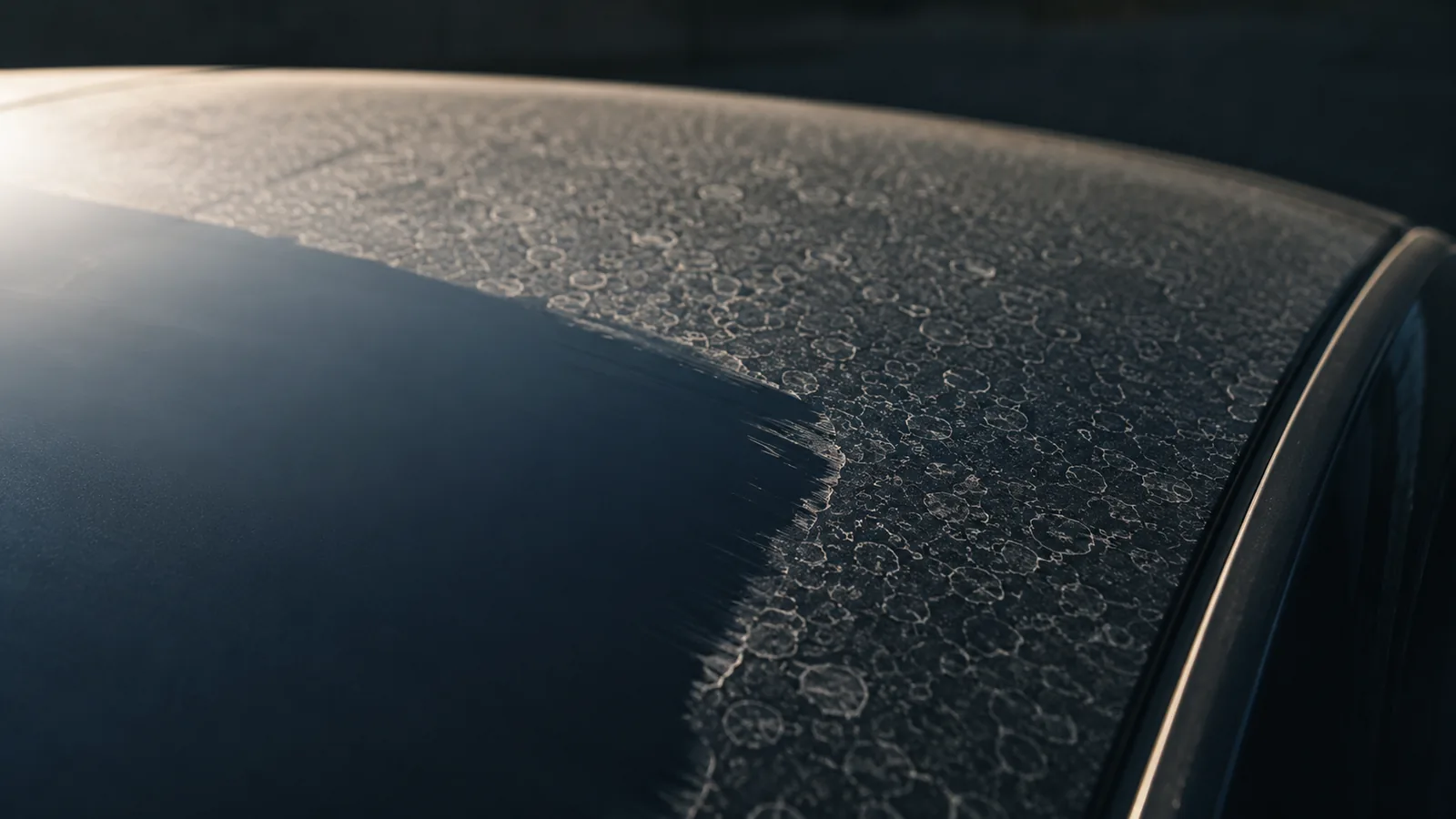
We went looking for a defensible answer to this question and could not find one. Not a disputed answer — no answer at all, in the sense of a number attached to a measurement anyone had published.
What exists instead is a range so wide it is useless. The same category of product is credited with six weeks and with nine years by sources that each describe themselves as having tested it. We found a single spray coating described as lasting “up to 8 weeks” by one site and “up to 5 years” by another.
Both of those cannot be describing the same phenomenon. Understanding why they conflict is more useful than any number we could offer you today.
Why the claims disagree so wildly
Nobody agrees on what “lasting” means. A coating can stop beading water while still providing chemical resistance and gloss. It can look glossy while having lost its hydrophobic behaviour entirely. Depending on which property you treat as the definition of survival, the same coating on the same panel can be called dead at four months or alive at two years. Almost no claim specifies which property it means.
Almost nobody uses a control. Without an untreated reference under identical exposure, there is no way to separate what the coating did from what the weather, the paint and the wash routine did. A panel that still looks good after a year in a garage tells you nothing about the coating.
Conditions are never stated. UV load, rainfall pH, water hardness, road salt and wash frequency all matter enormously, and a durability figure without them is not transferable to your car.
Application quality is invisible in the claim. A manufacturer’s laboratory figure comes from an ideal application on ideal paint. Your result comes from your preparation in your driveway.
The incentives point one direction. Manufacturers benefit from high numbers. Affiliate sites benefit from repeating them, because a product with an impressive durability claim converts better. There is almost no commercial reward anywhere in the chain for measuring carefully and publishing a lower number.
We are a manufacturer. We sit inside that last incentive, which is the reason to read what follows sceptically and the reason we decided to measure instead.
What can be said with confidence
Some things are well enough established to state plainly:
Product class sets the ceiling. A professionally installed multi-layer coating, a consumer spray coating, a synthetic sealant and a natural wax are separated by orders of magnitude in film thickness and cross-link density. Spray coatings live in months. Professional installations can live in years. No spray, ours included, is a substitute for a professional installation.
Hydrophobicity fails first, and long before protection does. The most common way people conclude a coating has died is that water stops beading. That is the most visible property and among the first to degrade. Chemical resistance and gloss typically outlast it, which means “it stopped beading” and “it stopped working” are different events, often months apart.
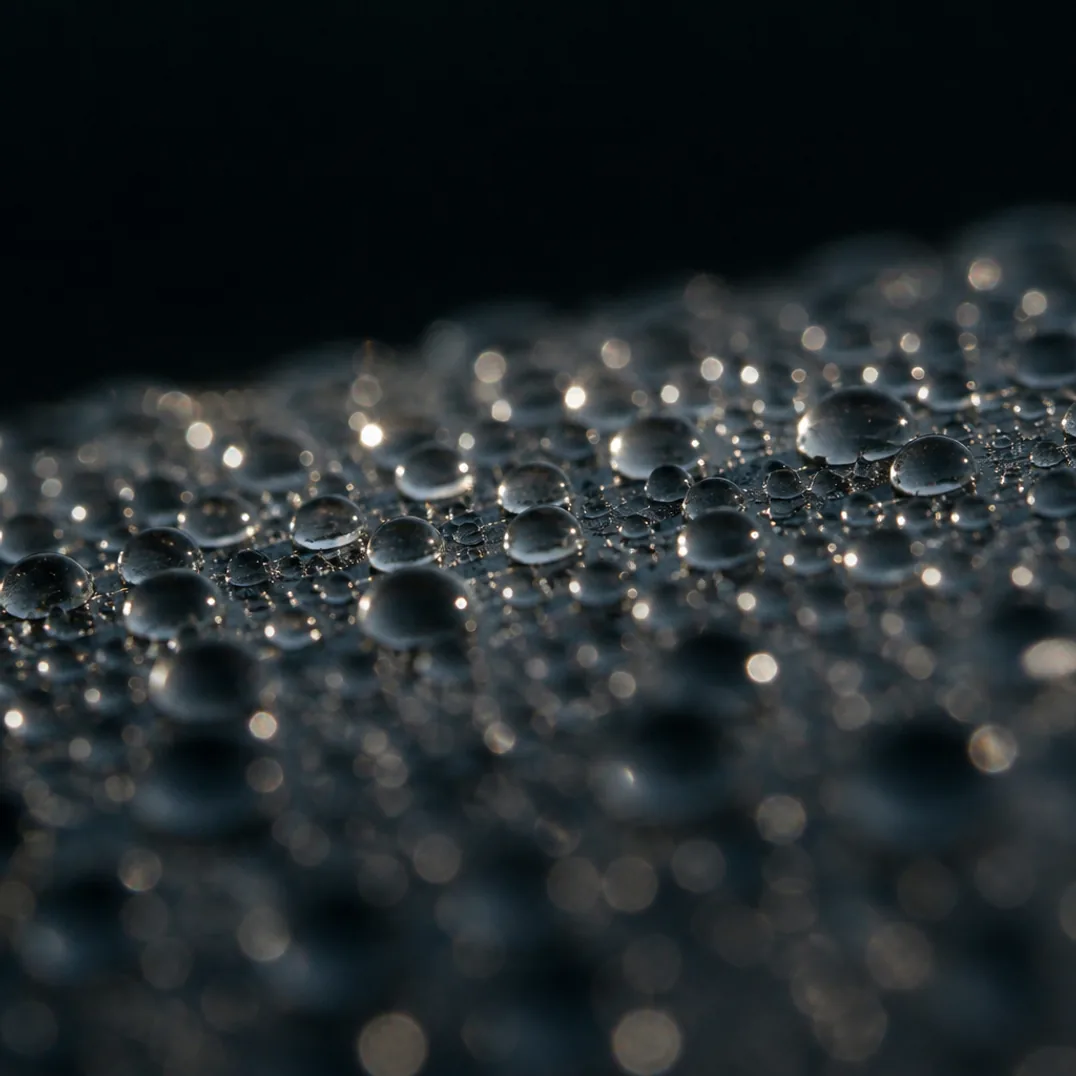
Tight beading is the visible proxy most people use for “the coating is alive.” It fails earlier than chemical resistance. Illustration of the look — not a reading from our panels.
Maintenance dominates weather. Automatic washes with aggressive detergents and brushes are the fastest way to remove a coating. Two cars with the same coating and different wash routines will not be comparable.
Horizontal surfaces fail first. Bonnet, roof and boot take the UV and the standing water. Vertical panels routinely outlast them by a wide margin, so a single figure for a whole car is a simplification regardless.
What we are actually measuring
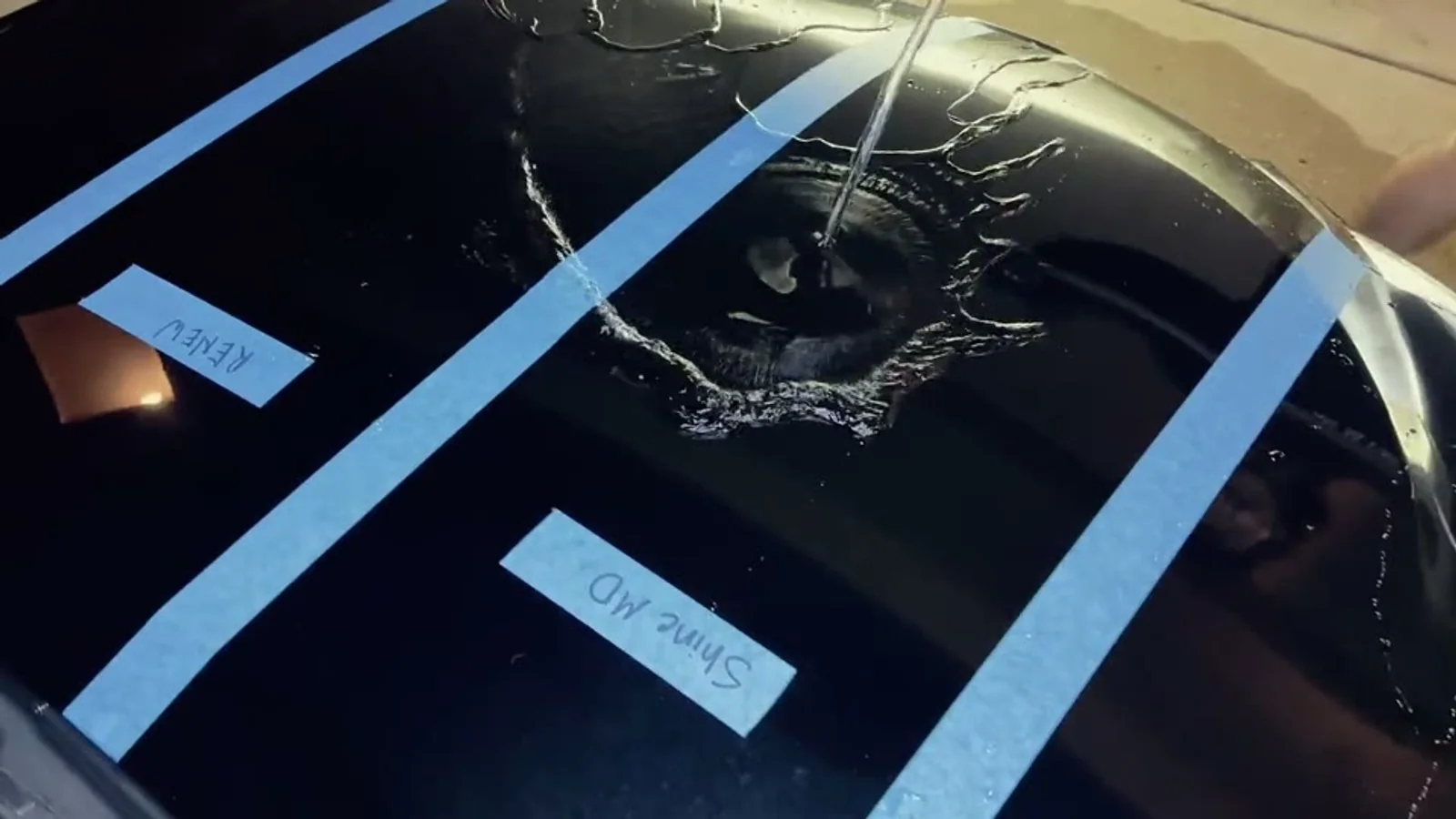
The same water, the same panel, four coatings, sections labelled in marker on masking tape. Still from our own filming. Sheeting behaviour like this is what we log on a fixed schedule instead of judging once on application day.
Rather than adding another unsourced number, we are running an 18-month durability study designed so that its answer means something.
Matched panels, all the same paint. Each panel split down the centre so half is coated and half is an untreated control experiencing identical exposure. Contact angle by goniometer, gloss by calibrated meter, beading and sheeting graded against a fixed written scale, every 30 days, with dated photographs from a fixed camera position and a recorded cumulative wash count.
Every reading is published as it is taken. Our own product is in the test, and if a competitor holds a higher contact angle at month nine, that is what the table will show.
The limitations are published alongside it, because they are real: test panels are not driven cars, one location is one climate, and one panel per product means we cannot yet report variance between samples.
The answer you can use today
Until there is data, here is the framing we would give a friend:
Treat spray coating durability claims as marketing unless they come with a method. Assume the honest working life of a consumer spray coating is measured in months rather than years, expect the water behaviour to fade first, and judge a product by how well it survives your actual wash routine rather than by the number on the bottle.
And ask anyone claiming a durability figure — us included — how they measured it. The answer to that question is more informative than the figure itself.
Keep reading
All ceramic coatings guides →
Graphene vs Ceramic Coating: What Is Actually Different
Nearly every graphene coating is a silica coating with graphene added. What that means for durability claims, and which differences we can currently measure.
Does Graphene Coating Actually Work? What Can and Cannot Be Claimed
We make a graphene coating, so we tested whether graphene does anything measurable. What the claims are, which are testable, and what the evidence shows.
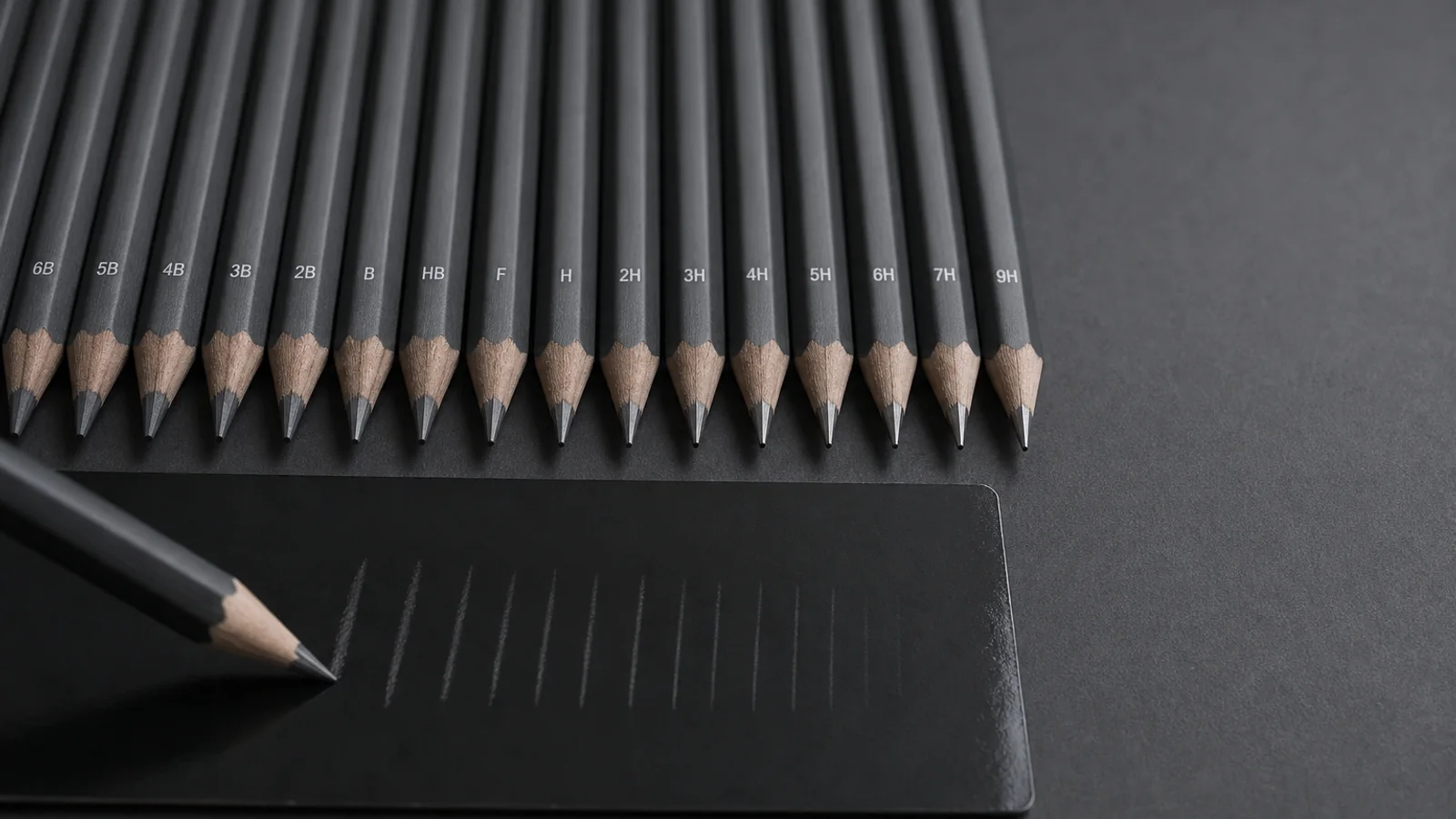
What “9H hardness” actually means on a ceramic coating, and why some brands claim 10H
The pencil hardness scale stops at 9H. We read what fifteen coating brands publish: who cites a test standard, and who claims a result above the maximum.