Coating Durability Study: 18 Months, Measured
A long-run test of spray coatings on matched panels with split-panel controls, logging water contact angle, beading and gloss monthly with dated photographs.
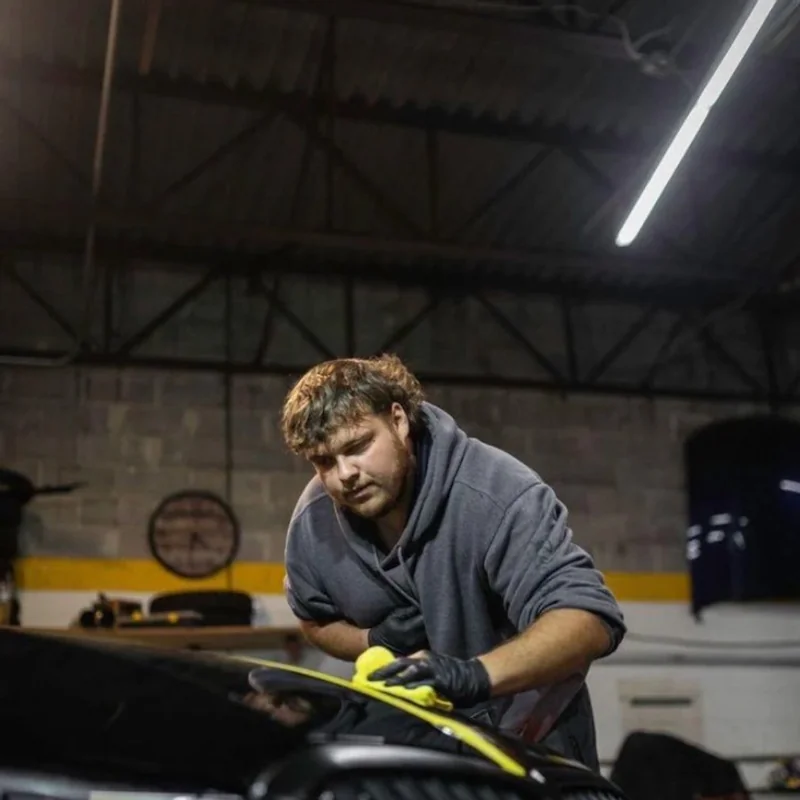
By Ducky, Co-founder and Lead Tester, ShineMD
Ducky works for Shine Master Detailers LLC, which makes ShineMD.
Products under test
- ShineMD Ultimate Shine and ProtectionOur productMade by us
- System X Renew Ceramic Spray CoatingPurchased at retail
- Nexgen Ceramic Spray Silicon DioxidePurchased at retail
- Adam's Polishes CS3 Ceramic Spray CoatingPurchased at retail
Method
Identical automotive test panels, all the same colour and clear coat, are decontaminated with an iron remover, clay treated, machine polished to a uniform finish and wiped with a panel prep solvent so every product starts on chemically identical paint. Each panel is divided down the centre with the coating applied to one half only, leaving the other half as an untreated control on the same panel and under identical exposure. Products are applied strictly per their own manufacturer instructions, by hand, at shop ambient temperature, and cure indoors for the duration each brand specifies. Panels are then mounted outdoors facing south at a fixed 45-degree angle and left fully exposed. Every 30 days each panel is rinsed with deionised water and measured: water contact angle by goniometer, beading and sheeting behaviour graded against a fixed written scale, and gloss recorded with a calibrated meter at a fixed angle. Every panel is photographed at each interval from a fixed camera position under the same lighting. Panels receive a standardised contact wash every 30 days using pH-neutral shampoo, a fresh microfibre mitt and identical technique, and the cumulative wash count is recorded alongside each measurement. All readings are published as collected, including readings that do not favour our own product.
Instruments
- Contact angle goniometer
- Calibrated gloss meter, fixed angle
- Infrared surface thermometer
- Fixed-position camera rig with consistent lighting
- Deionised water supply for rinse-down before measurement
Raw readings
Collection is under way. No readings have been taken yet.
Panels are prepared and the method above is fixed. Readings will appear in this table on the interval schedule, as they are taken, without editing. We would rather show an empty table than a number we have not measured.
Limitations of this test
Naming these is what separates a test from marketing.
- Test panels are not cars. They see no road film, fuel splash, exhaust residue or door handle contact, so real-world durability on a driven vehicle will be shorter.
- A single geographic location means one climate. Results will differ in regions with harder water, heavier UV load or road salt exposure.
- Beading and sheeting are graded against a written scale by a human observer and are therefore less objective than the contact angle and gloss readings.
- One panel per product means we cannot report a variance across samples. A repeat run with replicate panels is planned.
- Adam's CS3 is a three-in-one cleaner and protectant, and Adam's markets it both as a topper and as a standalone coating. Their own figure for standalone use is 1 to 2 months, against 6 to 12 months for the others here, so it enters this table already expected to place last on durability. That is the comparison Adam's invites by selling it as standalone, but a low position is not evidence the product fails at the job most people buy it for.
- We manufacture one of the products under test. That is disclosed on every page, and the method above is published so that anyone can repeat it and check us.
This is the study the category does not have. Durability is the single most important property of a coating and the one nobody measures — manufacturers assert a figure, affiliate sites repeat it, and forum threads contradict both. We have seen the same product credited with eight weeks and with nine years by two sources that each claimed to have tested it.
Rather than add another unverified number, we are running the test properly and publishing everything as it comes in.
Why the split-panel control matters
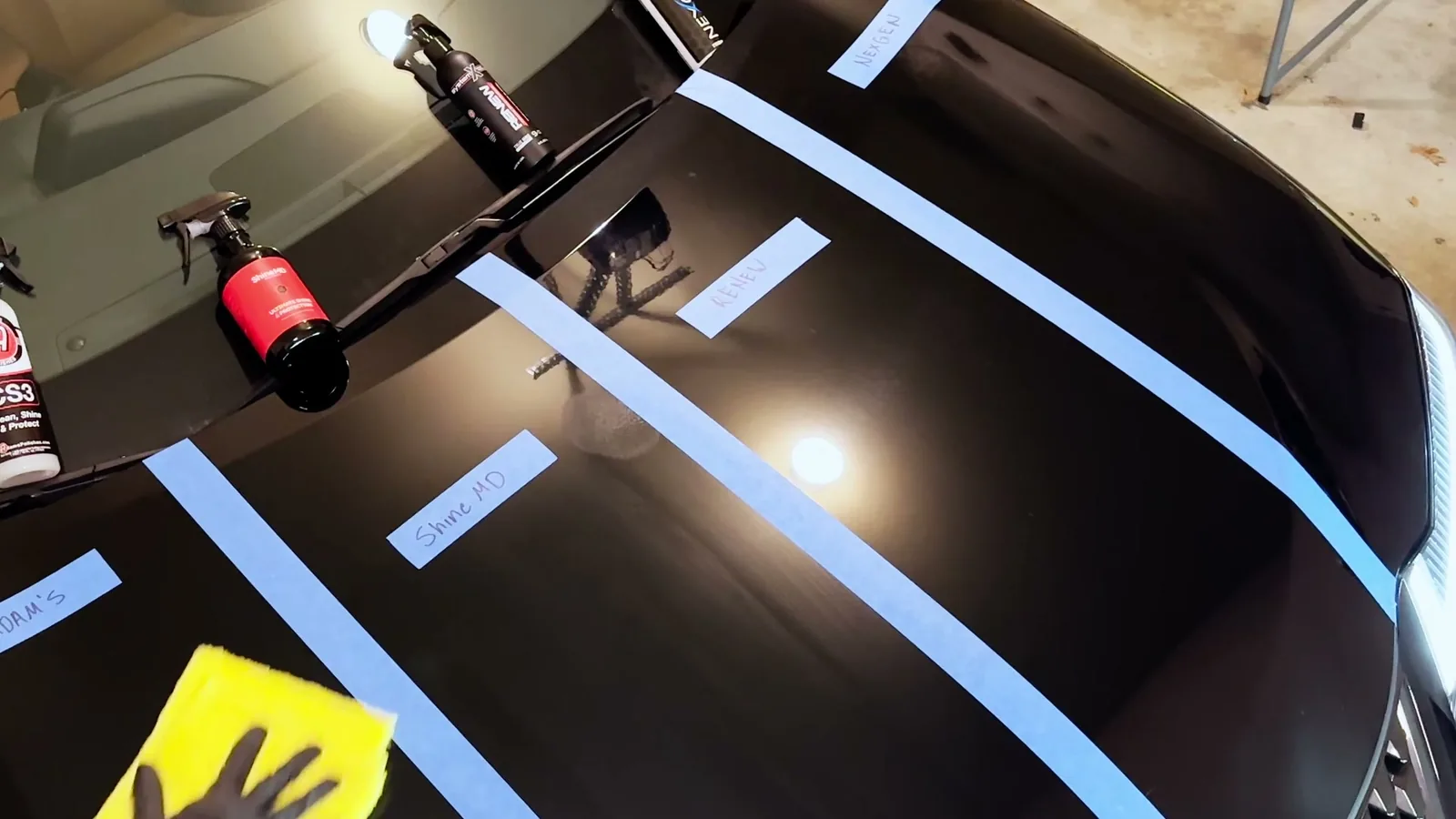
Levelling one section while the neighbouring sections stay masked. Still from our own filming. Each product gets the same panel, the same ambient conditions and the same hands.
The most common flaw in coating comparisons is the absence of a control. Without an untreated reference under identical exposure there is no way to separate the coating’s contribution from the weather, the paint, or the wash technique. Coating one half of each panel and leaving the other half bare gives us a reference that experiences precisely the same conditions, on the same piece of paint, for the same duration.
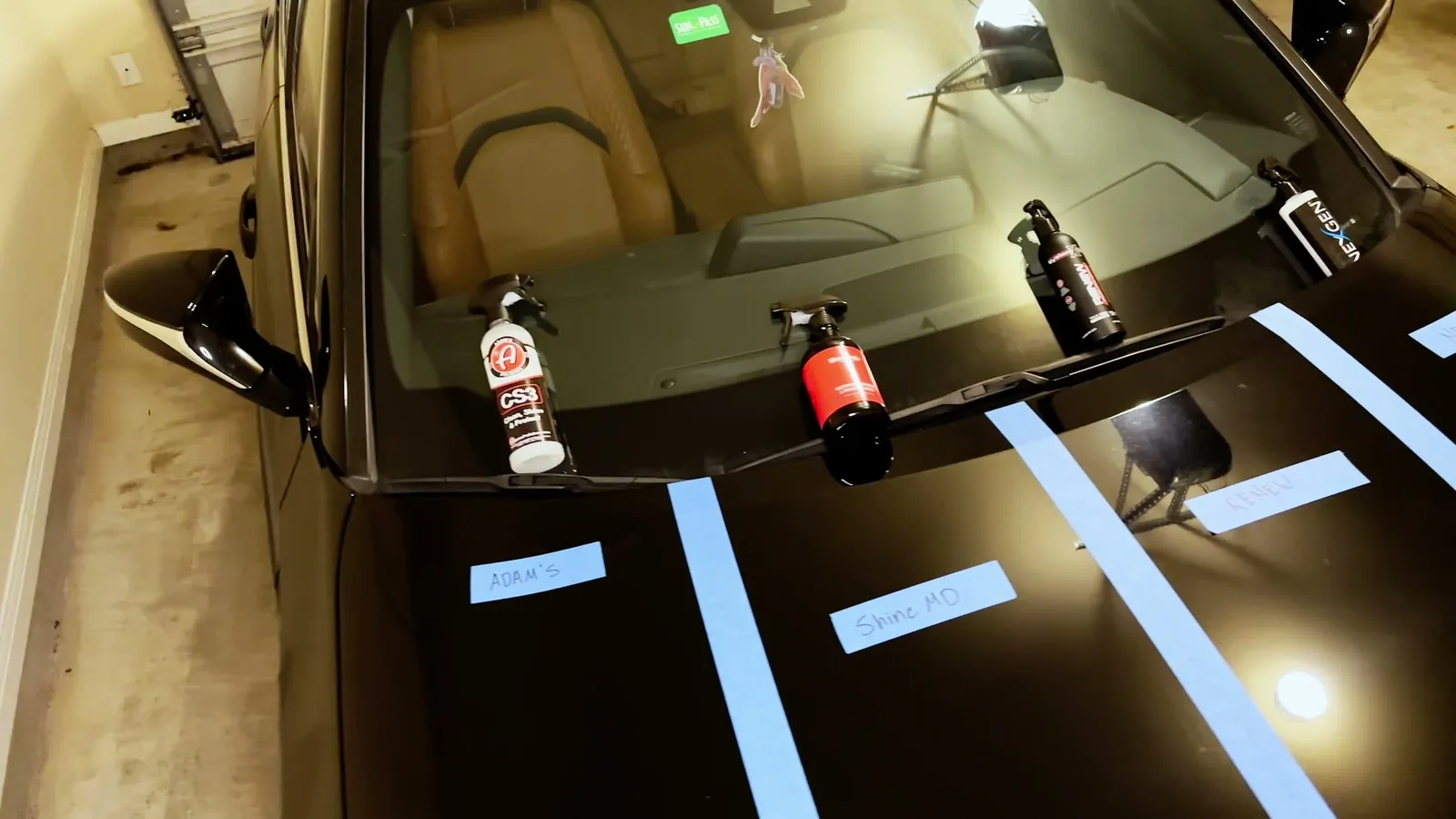
Customer-vehicle split-panel masking from our comparison filming. The long-run durability study uses dedicated outdoor panels with the same masked-section idea; this still shows how we keep products from contaminating each other during application.
What we will publish, including the parts we will not enjoy
Every reading goes up as it is taken. If a competitor holds a higher contact angle at month nine than our own product does, that is what the table will say. If our product’s beading falls off earlier than we expect, that is what the table will say.
That commitment is the entire point. We built ShineMD because we tested what was available and were not satisfied with it, and that claim is worth nothing unless we are willing to be measured by the same instruments.
Data collection is under way and the first interval readings will appear here on schedule.