Ceramic Coatings
Graphene vs Ceramic Coating: What Is Actually Different
Nearly every graphene coating is a silica coating with graphene added. What that means for durability claims, and which differences we can currently measure.
By Ducky, Co-founder and Lead Tester, ShineMD
Ducky works for Shine Master Detailers LLC, which makes ShineMD.
The framing of this question is wrong in a way that makes it unanswerable, and the wrong framing is used by nearly everyone selling either product.
“Graphene versus ceramic” implies two alternative chemistries. In practice, almost every graphene coating on the market is a silica coating with graphene oxide added to it. They are not competing categories. One is a modification of the other.
Once you see that, most of the comparison content in this category stops making sense — including, historically, some of ours.
What “ceramic coating” actually means
There is no regulated definition, which is the root of the confusion. In practice a ceramic coating is a product whose film-forming ingredient is a silicon-based compound, usually silicon dioxide or a silane or siloxane precursor that cures into a hard, cross-linked, glass-like layer bonded to the clear coat.
That layer is what produces the properties people buy: hydrophobicity, chemical resistance, gloss, and a slick surface that releases contaminants.
The percentage of silica in the bottle is the number brands compete on, and it is close to meaningless in isolation. A high-silica product with a poor carrier system and a difficult cure can easily underperform a lower-silica product formulated properly.
What adding graphene changes
Graphene oxide is added in very small proportions. The claims made for it fall into three groups, and they differ enormously in how well supported they are.
Reduced dust attraction, via an anti-static effect. This is the most specific and most testable claim, and the one most heavily marketed. It is also the one we could find no public measurement for by anyone, including the brands making it.
Lower surface temperature in sun. Physically plausible given graphene’s thermal conductivity, but a coating layer measured in microns has very little material in it, and the claim that this meaningfully changes panel temperature is a much bigger leap than it sounds.
Better resistance to marring and water spotting, on the theory that the film is slightly more flexible than silica alone and less prone to the micro-cracking that traps mineral deposits. This is the most mechanically sensible of the three and the least specific.
What none of these claims come with is a number.
What we can and cannot tell you
We manufacture a graphene-infused coating. That is the reason to be sceptical of anything we say here, and it is also the reason we are running a controlled test rather than repeating the marketing.
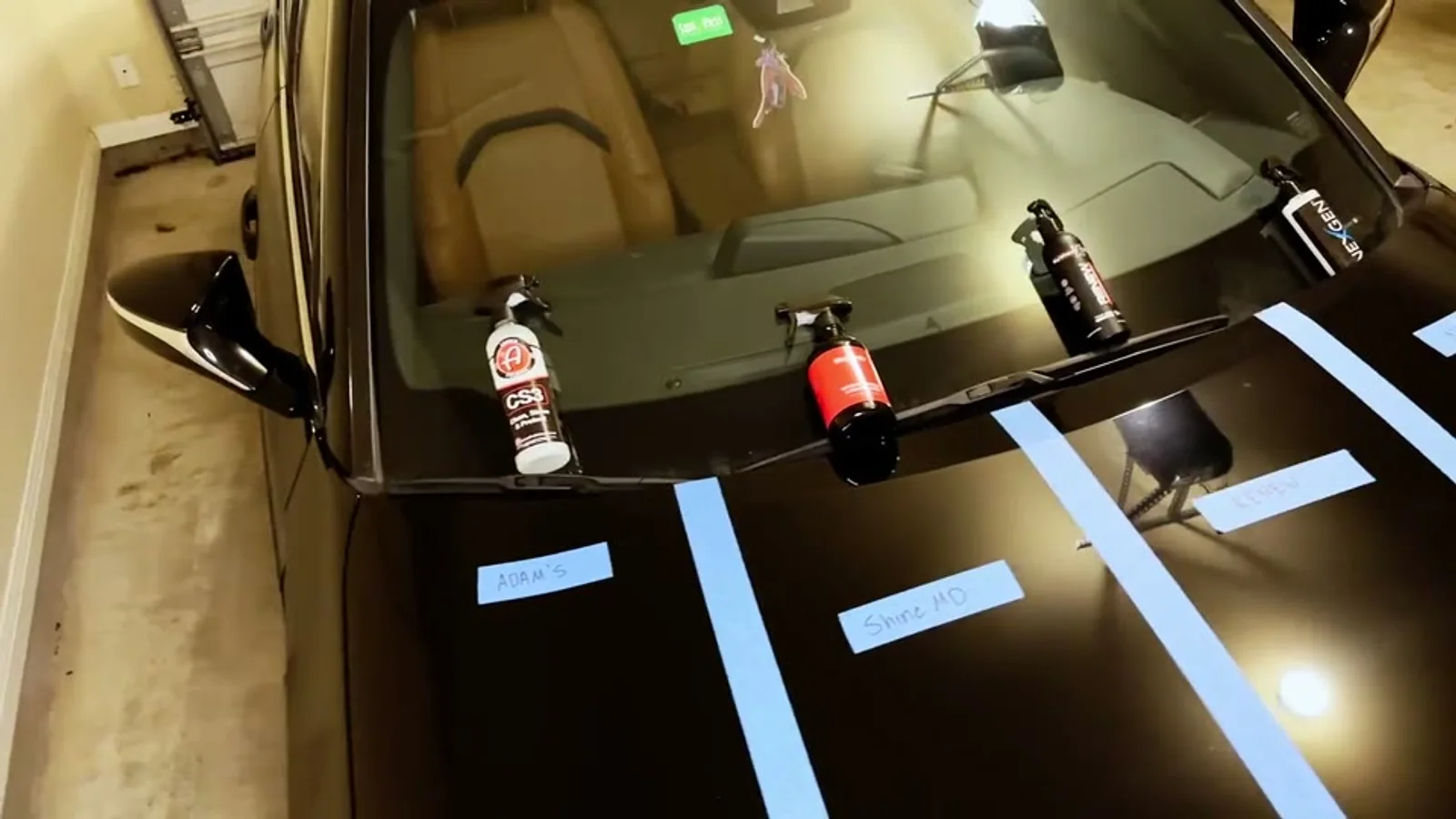
One panel, masked into sections, one product per section, labels written on the tape. Still from our own filming. It is a crude rig and that is the point: the same paint, the same day, the same weather.
Our graphene versus silica test puts a graphene coating and a comparable silica coating on matched, identically prepared panels and measures the three claims above with the same instruments on the same days. The method is published in full, including the ways it falls short — matching two commercial products on silica loading is approximate, and a null result would not prove graphene does nothing, only that we could not detect it at this scale.
Data collection is under way. When there are readings, they will appear in that table whether or not they favour us.
Until then, the honest position is: we do not know how much of the graphene story is real, and neither does anyone else selling it.
What actually determines whether a coating performs
This is the part that gets lost, and it matters far more than the graphene question.
Preparation. A coating bonds to whatever you put it on. Applied over old wax, polish residue or embedded contamination, it bonds to that instead of your paint and fails early. Decontamination and a solvent wipe do more for longevity than any ingredient in the bottle.
Application technique. Most reported coating failures we see are high spots, thin coverage or a panel done in direct sun. The products are less forgiving than their marketing suggests.
Cure conditions. Cross-linking needs time at a reasonable temperature and away from water. A coating rained on during its cure window has not fully formed.
Maintenance. Automatic washes with harsh detergents and brushes remove coatings faster than weather does.
A well-prepped, well-applied mid-range silica coating will outlast a badly applied premium graphene one every time. That is not a marketing-friendly statement for us to make, and we are confident in it.
So which should you buy
If you are choosing between two products and one says graphene, that word should not be the deciding factor. Look at how forgiving the application is, whether the cure requirements suit where you will be working, and whether the durability claim comes with any evidence at all.
We think most durability claims in this category — including the numbers on our own competitors’ bottles, and the numbers people have historically expected us to produce — are asserted rather than measured. That is precisely why we started publishing our own durability study with an untreated control on every panel.
Ask for the measurement. If nobody will show you one, treat the claim as marketing, ours included.
Keep reading
All ceramic coatings guides →
Does Graphene Coating Actually Work? What Can and Cannot Be Claimed
We make a graphene coating, so we tested whether graphene does anything measurable. What the claims are, which are testable, and what the evidence shows.
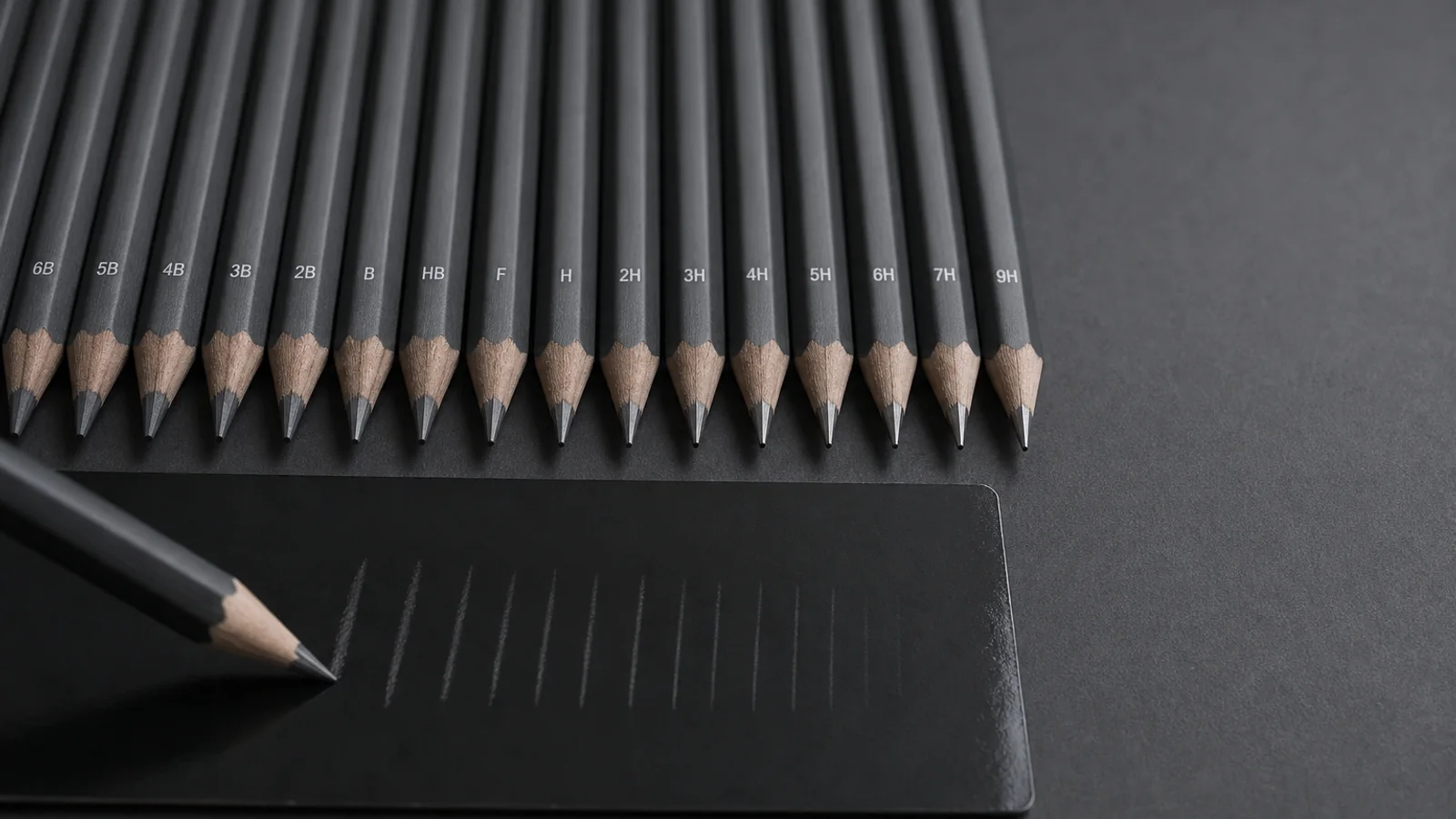
What “9H hardness” actually means on a ceramic coating, and why some brands claim 10H
The pencil hardness scale stops at 9H. We read what fifteen coating brands publish: who cites a test standard, and who claims a result above the maximum.
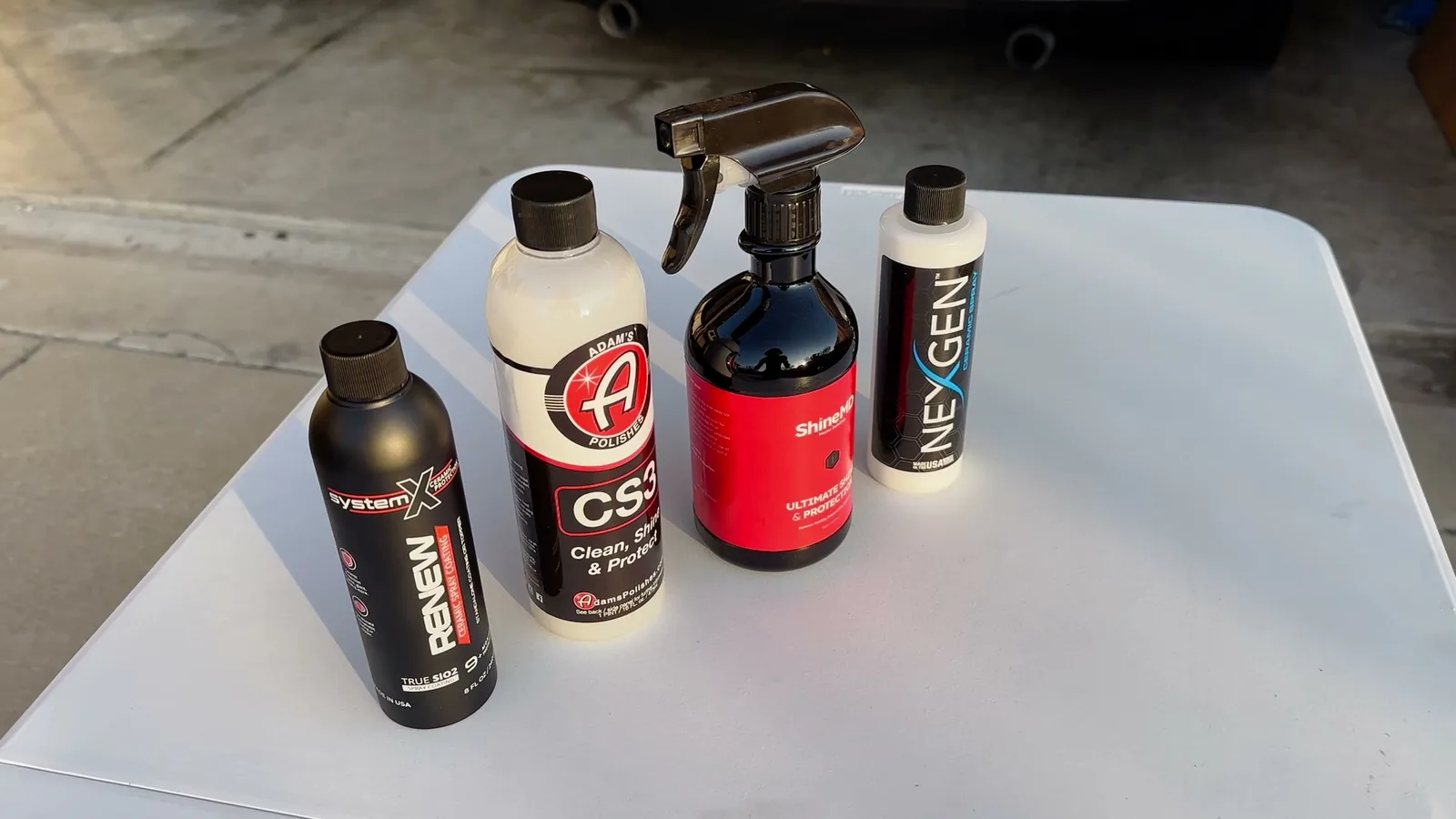
The Best Ceramic Spray Coating for Most People
Four ceramic sprays compared on application, price, and maker claims. Ours is one of them. Durability rankings wait on published instrument readings.