Seasonal Car Care: Salt, Pollen and Sun
Three seasons, three different mechanisms of damage, three different defences.
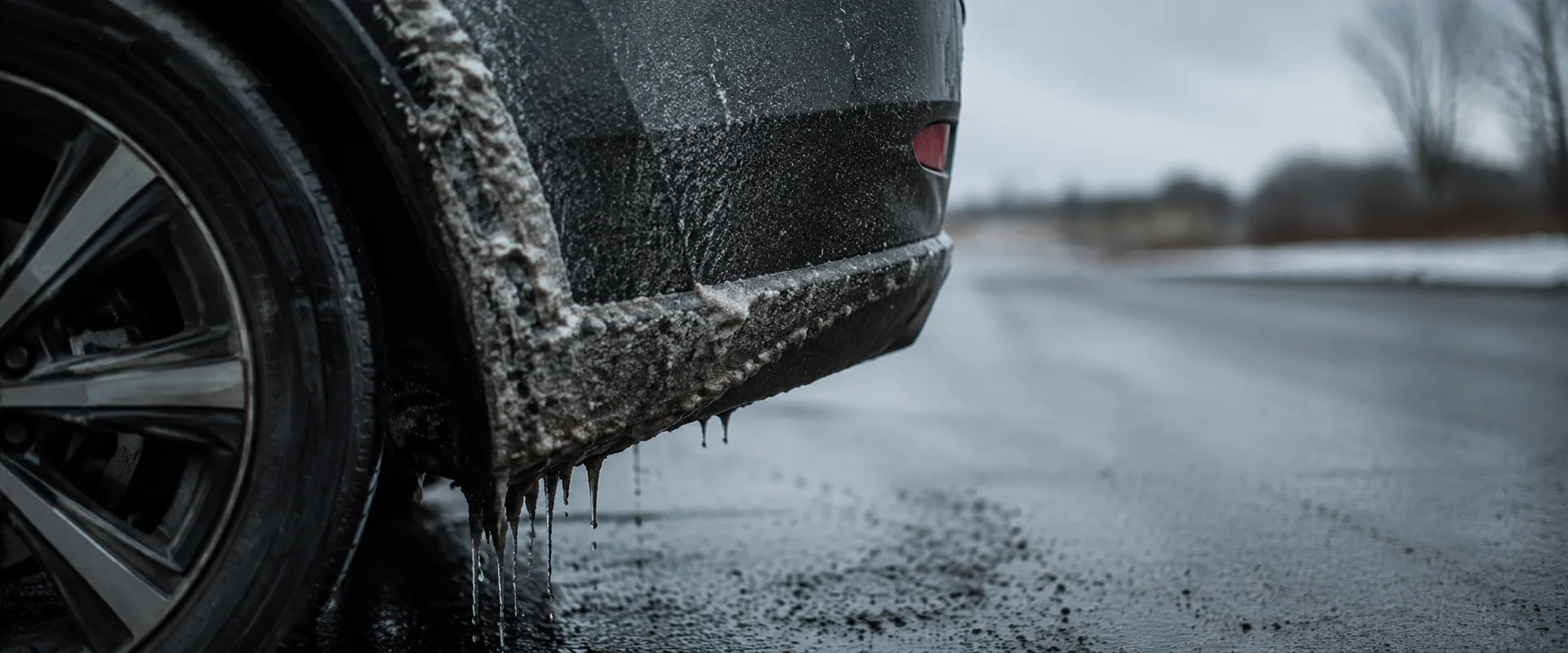
Seasonal damage is the most predictable kind, which makes it the most preventable. It is also where car care writing is at its most repetitive — the same handful of claims recycled every year with nobody checking whether they are true.
Winter: chloride
Road salt does not attack paint so much as it accelerates corrosion wherever paint has already been breached, and it collects in the places you cannot see. The standard advice is to rinse the undercarriage, which is sound. What nobody establishes is whether a rinse actually removes the chloride or merely redistributes it, and that is measurable with a conductivity meter for the price of a tank of fuel.
Spring: pollen
The claim repeated across every regional detailing blog is that pollen is acidic and etches clear coat once it gets wet. It appears everywhere and is evidenced nowhere. We could not find a single source that had measured the pH of pollen in suspension or documented etching on a test panel, so we are doing it — multiple tree species, measured, applied to panels, tracked across a season.
Summer: ultraviolet
This one is real and well understood. UV drives the chemical breakdown of clear coat, which is what oxidation actually is, and dark paint on a hot day reaches temperatures that accelerate it considerably. Shade and a UV-stable protective layer both genuinely help, and this is the season where a coating earns its keep most measurably.