Paint Correction and Swirl Mark Removal
Correction removes clear coat permanently. The most important skill is knowing when to stop.
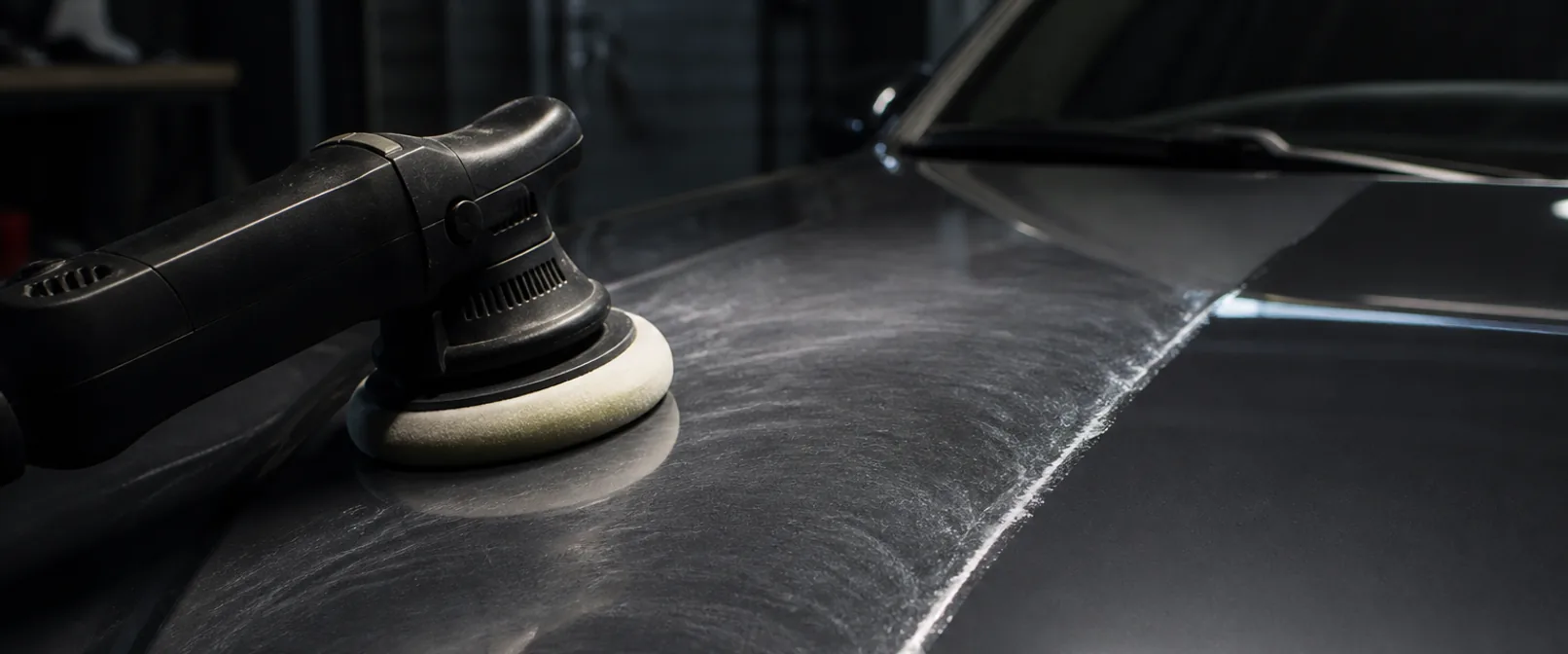
Paint correction is the only part of detailing that removes material permanently. Every polishing pass takes a measured amount of clear coat off your car and you never get it back. Done well it is transformative; done carelessly it is the most expensive mistake in the hobby.
The chapter everyone skips
Read the well-ranked guides on swirl removal and you will notice something they all share. Every one of them tells you to stop if your paint is getting thin. Not one of them teaches you how to know.
That is advice by omission, and on a task this consequential it matters. Clear coat on a modern car is on the order of forty to sixty microns. A moderately aggressive polishing pass can remove a few microns. You have a limited budget and no way to sense it by feel.
So we cover the part others leave out: what a paint depth gauge costs, how to read one, what typical factory thickness looks like by manufacturer, roughly how much a pass removes, and the point at which the correct decision is to leave the defect alone. Sometimes the right answer is not to polish, and a guide that cannot say so is not being honest with you.