Stain Removal
How to Remove Water Spots From Car Paint, By Type
Three different problems get called water spots and each needs a different fix. How to identify which one you have before you reach for anything abrasive.
By Ducky, Co-founder and Lead Tester, ShineMD
Ducky works for Shine Master Detailers LLC, which makes ShineMD.
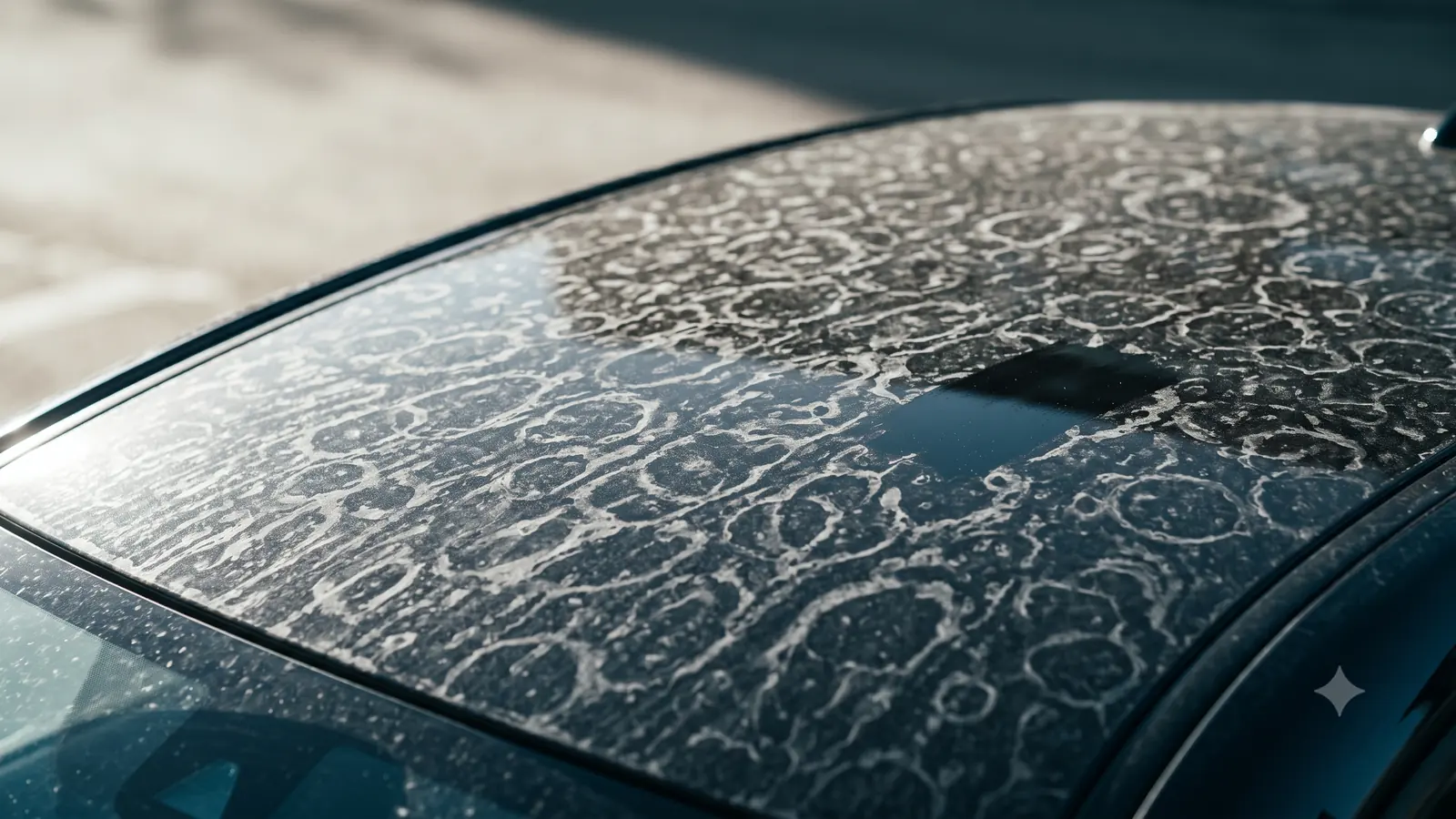
“Water spots” describes three different problems with three different fixes, and the reason so many people fail to remove them is that they diagnose the wrong one and then escalate. Someone attacks a mineral deposit with a polisher, or tries to dissolve an etched crater with vinegar, and concludes that water spots are impossible.
They are not impossible. They are just not one thing.
Identify which one you have
Do this before touching anything. Wash and dry the panel, then look at the spots from a low angle under bright light, and run a clean fingertip over one.
Type 1: mineral deposits sitting on top. Visible as chalky white or grey rings. You can feel slight texture. They disappear or dull noticeably when you wet the panel. This is dried tap water that left its dissolved minerals behind. The paint is undamaged and this is a cleaning job.
Type 2: etched into the clear coat. Visible as rings or crescents that stay visible when the panel is wet. Smooth to the touch. The mineral deposit sat long enough — usually with heat — for the concentrated alkaline solution to react with the clear coat, leaving a shallow depression. This is a paint correction job.
Type 3: stains in the coating or sealant, not the paint. These look like Type 1 but do not respond to acid, and they often appear as a broad haze or blotchiness rather than discrete rings. The deposit has bonded into your protective layer. The fix is usually to remove and reapply the protection.
The wet test is the one that matters. If wetting the panel makes the spot vanish, it is on top of the surface. If the spot survives being wet, it is in the surface.
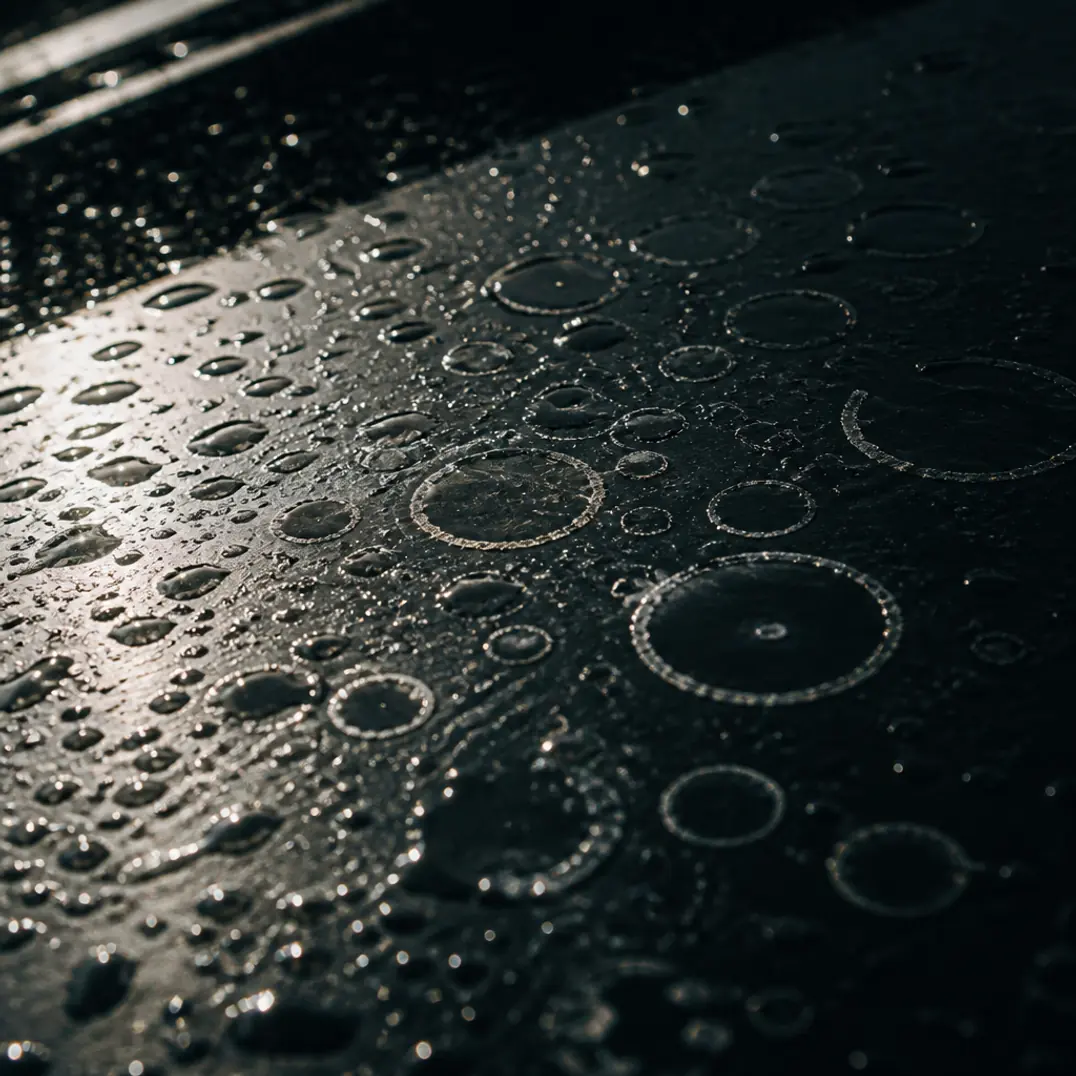
Etched rings stay visible under water. That is the diagnostic that separates a cleaning job from a correction job. Illustration.
Type 1: mineral deposits
These come off with acid, not abrasion. Minerals left by hard water are predominantly calcium and magnesium carbonates, which dissolve readily in mild acid and barely respond to polishing.
Start with a dedicated water spot remover. These are mild acids formulated for automotive paint, and they are the right tool. Follow the dwell time on the bottle, work one panel at a time out of direct sun, and rinse thoroughly.
Distilled white vinegar diluted 1:1 with distilled water works for the same reason and is what most people have at home. Apply on a saturated microfibre rather than spraying, give it a minute, then rinse the panel completely. Do not let it dry on the surface and do not leave it on trim, rubber or bare metal.
Rinse far more thoroughly than feels necessary. Acid residue left in panel gaps and around trim continues to work on things you did not intend to treat. This is the step people skip.
Expect to strip your protection. Any acid strong enough to dissolve carbonate deposits will take wax, sealant and most spray coatings with it. Plan to re-protect.
Do not reach for a polisher. Abrading the paint to remove a deposit that would have dissolved in vinegar removes clear coat you cannot put back.
Type 2: etched spots
Acid will not help here, because there is nothing sitting on the surface to dissolve. The clear coat itself is deformed and the only fix is to level it by removing a small amount of it.
Work up, not down. Start with the least aggressive option that could plausibly work — a fine polish by hand or on a soft pad — and only escalate if it fails. Most light etching clears with a single pass of a finishing polish.
Deeper etching needs a compound and a machine, and at that point the constraint is how much clear coat you have. Clear coat is typically well under a tenth of a millimetre thick, and every correction spends some of it permanently. This is the point at which reading our paint correction guidance first is worth the delay, particularly on the question of measuring what you have before removing any of it.
If the etch is deep enough to catch a fingernail, polishing will not reach it safely.
Type 3: spots in the coating
This is the case that generates the most frustration, because the panel is protected, the owner has done everything right, and nothing works. Acid does nothing because the deposit is not on the paint. Polishing seems drastic because the paint is fine.
The honest answer is that the protective layer has taken the damage instead of the paint — which is what it is for — and the layer now needs replacing. On a spray coating or sealant, a light polish removes the affected layer along with the staining and you reapply. On a professionally installed ceramic coating, this is a conversation with the installer, because some coatings can be lightly polished and reapplied and others cannot.
Treat this as the protection doing its job. A stain in a sacrificial layer is a better outcome than an etch in your clear coat.
Preventing the ones that matter
Almost all water spotting is avoidable, and the prevention has nothing to do with what product is on the paint:
Never let water dry on the panel. This is the entire cause. Wash out of direct sun, work panel by panel, and dry immediately.
Never wash a hot panel. Water evaporates before you reach it with a towel, and heat is what turns a deposit into an etch.
Sprinklers and bore water are the worst offenders. Municipal tap water is usually manageable. Irrigation water often has a far higher mineral load, and a car parked in range of a sprinkler overnight can pick up etching in a single cycle.
Dry with a plush towel, not a chamois drag. The goal is to lift water off, not push it around.
A slick surface — coated, sealed or waxed — genuinely helps, because water sheets off rather than sitting in droplets, and less standing water means less mineral left behind. We make a coating, so discount that as you see fit. It reduces how much water stays on the panel; it does not change what happens to water that stays there anyway. Drying the car still matters more.
Keep reading
All stain removal guides →
How to Remove Bird Droppings From Car Paint Before They Etch
Bird droppings etch paint through heat and shrinkage, not acid. What that changes about removing them, and how long you actually have before damage sets in.
How to Remove Tree Sap From Car Paint Without Damaging It
Tree sap removed on real painted panels, with the alcohol concentration question settled and the dwell times that actually worked on hardened resin.
How to Remove Bug Splatter From Car Paint and Front Bumpers
Bug remains break down paint through enzymes and alkalinity, which is why they worsen fast in heat. A soak-first method for bumpers, grilles and mirrors.