Stain Removal
How to Remove Bird Droppings From Car Paint Before They Etch
Bird droppings etch paint through heat and shrinkage, not acid. What that changes about removing them, and how long you actually have before damage sets in.
By Ducky, Co-founder and Lead Tester, ShineMD
Ducky works for Shine Master Detailers LLC, which makes ShineMD.
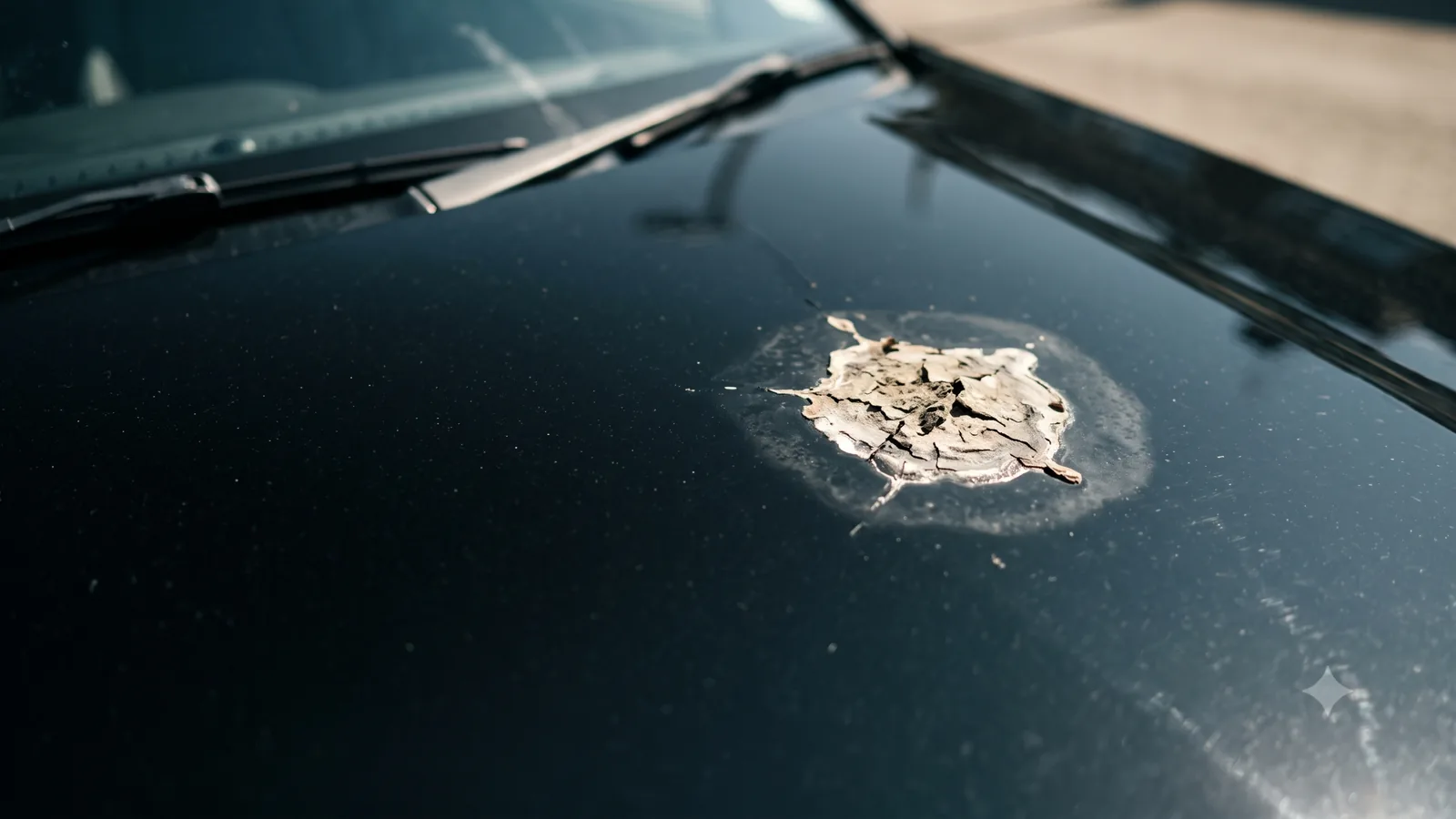
Almost everything written about bird droppings and car paint repeats the same explanation: droppings are acidic, and the acid eats your clear coat. It is a tidy story, it is what you will read on most detailing sites, and it is mostly wrong.
That matters, because the wrong mechanism leads people to the wrong urgency and the wrong technique.
What actually damages the paint
Bird droppings do contain uric acid, and they are usually acidic. But automotive clear coat is far more chemically resistant than that explanation implies — it survives acid rain, bug guts and industrial fallout without dissolving.
The dominant mechanism is physical. As a dropping dries in the sun, it shrinks and hardens, and it grips the clear coat while doing so. Clear coat softens slightly when hot. A dropping baking on a hot panel is therefore a hard, contracting shell bonded to a softened surface, and it pulls the clear coat into a shallow impression as it cures. What you are left with is not a chemical burn but a physical imprint, often a dull ring or a faint crater that follows the outline of the deposit.
This is why the damage tracks sun and panel temperature far more closely than it tracks the composition of the dropping. It is also why a dropping on a cool, shaded panel can sit for a couple of days and rinse off with nothing behind it, while the same dropping on a black hood in August afternoon sun can leave a permanent mark within hours.
There is a genuine acidic contribution, particularly with a diet-dependent dropping on a hot panel where concentration rises as water evaporates. Both mechanisms are real. But the heat-and-shrinkage one is the one that determines whether you end up with a mark, and it is the one nobody mentions.
How long do you have
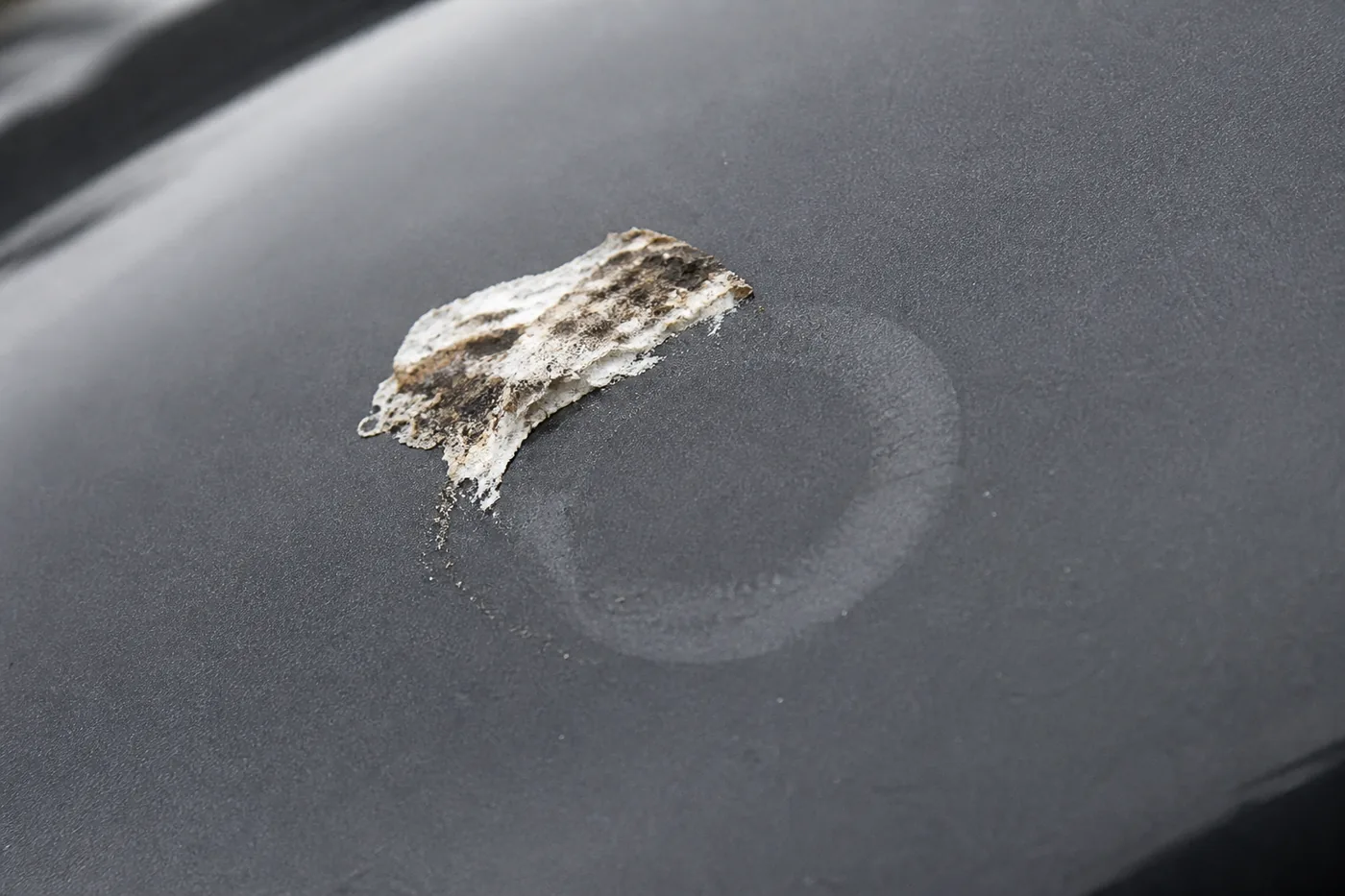
The dropping lifts off. The dull ring underneath is the part that needs polishing, and it forms while you are waiting for a convenient moment. Illustration.
Less time than most guides suggest, and it depends almost entirely on temperature.
On a cool panel out of direct sun, you generally have a day or two before there is any risk of a lasting mark. On a hot panel in direct sun, the working window can be under an hour. A dark car parked in summer sun is the worst case, because the panel surface can sit far above air temperature and the clear coat is at its softest exactly when the deposit is curing hardest.
The practical rule is not a number of hours. It is this: if the panel is hot enough to be uncomfortable to rest your hand on, treat it as urgent.
The method
Do not dry-wipe it. Ever. A dried dropping contains grit, undigested seed husks and mineral fragments. Dragging that across clear coat is sanding. This single mistake causes more visible damage than the dropping ever would have — a scratch you put there yourself is worse than an etch mark you might have avoided.
Cool the panel first if it is hot. Move the car into shade, or rinse the whole panel with plenty of cool water before you address the deposit. This stops the curing process and firms up the clear coat before you touch it.
Soak it, generously and patiently. Saturate a folded microfibre with warm water or a quick detailer, lay it over the deposit, and leave it for several minutes. The goal is to rehydrate the dropping until it releases on its own. This is the whole job — everything else is cleanup.
Add a second soak rather than pressure. If the deposit has not softened, re-wet and wait again. Time is doing the work. Pressure only transfers grit into the paint.
Lift straight up, then wipe once. When it is soft, lift the towel away with the bulk of the deposit in it rather than smearing it across the panel. Use a clean section of towel for the final wipe, and wipe in one direction.
Rinse the area. Residue left behind keeps working on the surface, and quick detailer alone does not fully remove it.
Re-protect the spot. Whatever you used to dissolve the deposit, plus the deposit itself, has likely compromised the protection on that patch of paint. That area is now the least protected part of the panel.
What to keep in the car
The single most useful preparation is a spray bottle of quick detailer and two clean microfibres in the boot. The reason is not that quick detailer is chemically special — it is that having something to hand converts a multi-hour bake into a two-minute soak. Nearly all lasting bird dropping damage happens to people who had nothing with them and left it until they got home.
Plain water in a spray bottle is most of the benefit.
If there is still a mark afterwards
Once the deposit is gone, look at the spot from a low angle in bright light. Three outcomes:
A faint dull patch that disappears when wet is usually residue or very light etching in the top of the clear coat. A light polish will normally clear it.
A visible ring or outline that persists when wet means the clear coat has been physically deformed. Polishing can level it if there is enough clear coat, and this is where knowing your paint thickness matters before you start removing any of it.
A crater you can feel with a fingernail has gone deeper than polishing can safely reach. That is a refinishing conversation, not a detailing one.
What actually prevents this
Protection helps, and it helps for a specific reason worth being precise about: a coating or sealant does not make the deposit less acidic and does not stop it drying. What it does is give the shrinking shell something to grip other than your clear coat, and make the surface slick enough that a soak releases it cleanly.
We manufacture a coating, so weigh that claim accordingly. What we will say is that we see this effect from wax, from sealants and from spray coatings alike — the mechanism is not proprietary to any product, ours included. Parking out of the sun does more than any of them.
Keep reading
All stain removal guides →
How to Remove Tree Sap From Car Paint Without Damaging It
Tree sap removed on real painted panels, with the alcohol concentration question settled and the dwell times that actually worked on hardened resin.
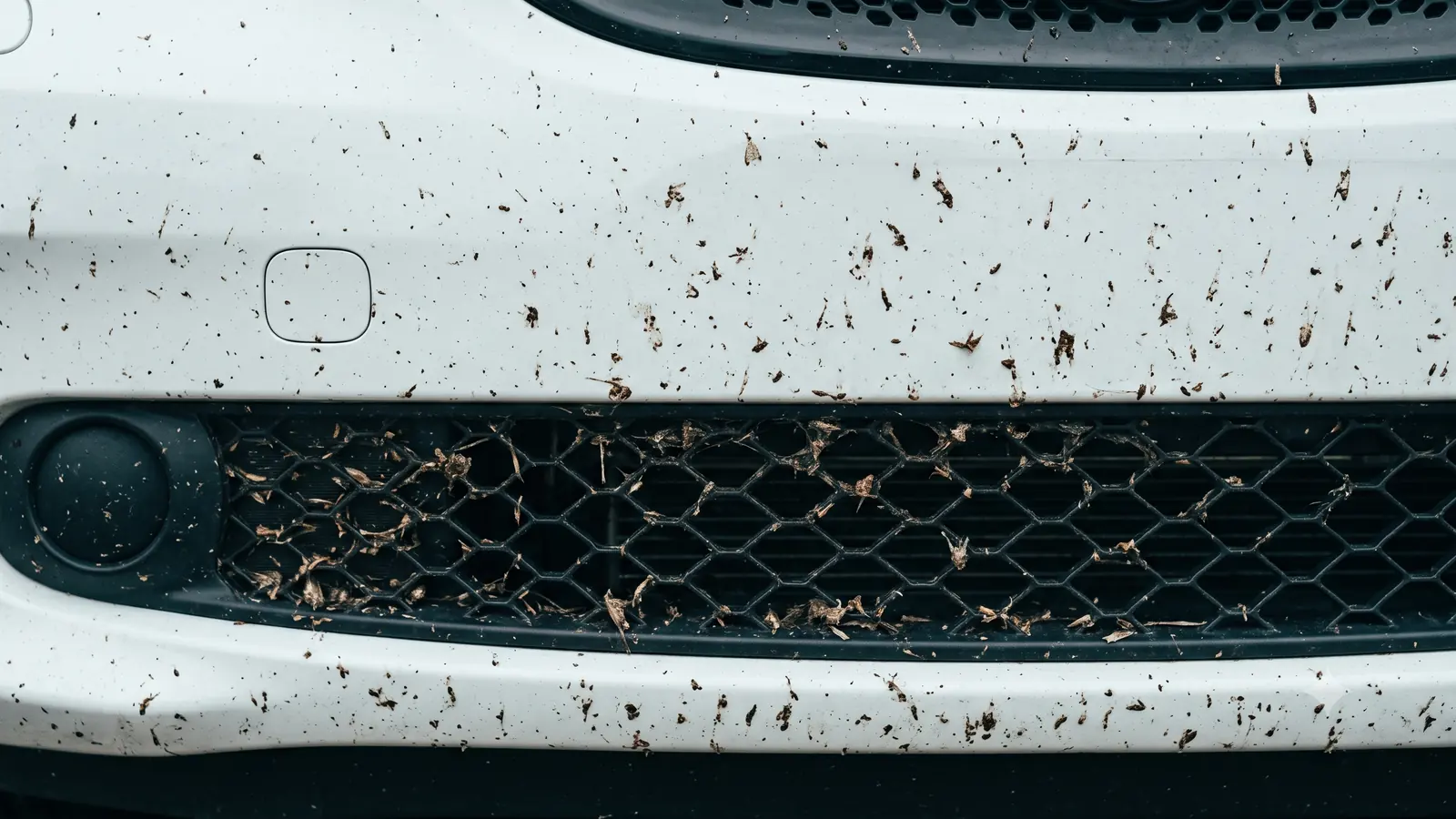
How to Remove Bug Splatter From Car Paint and Front Bumpers
Bug remains break down paint through enzymes and alkalinity, which is why they worsen fast in heat. A soak-first method for bumpers, grilles and mirrors.
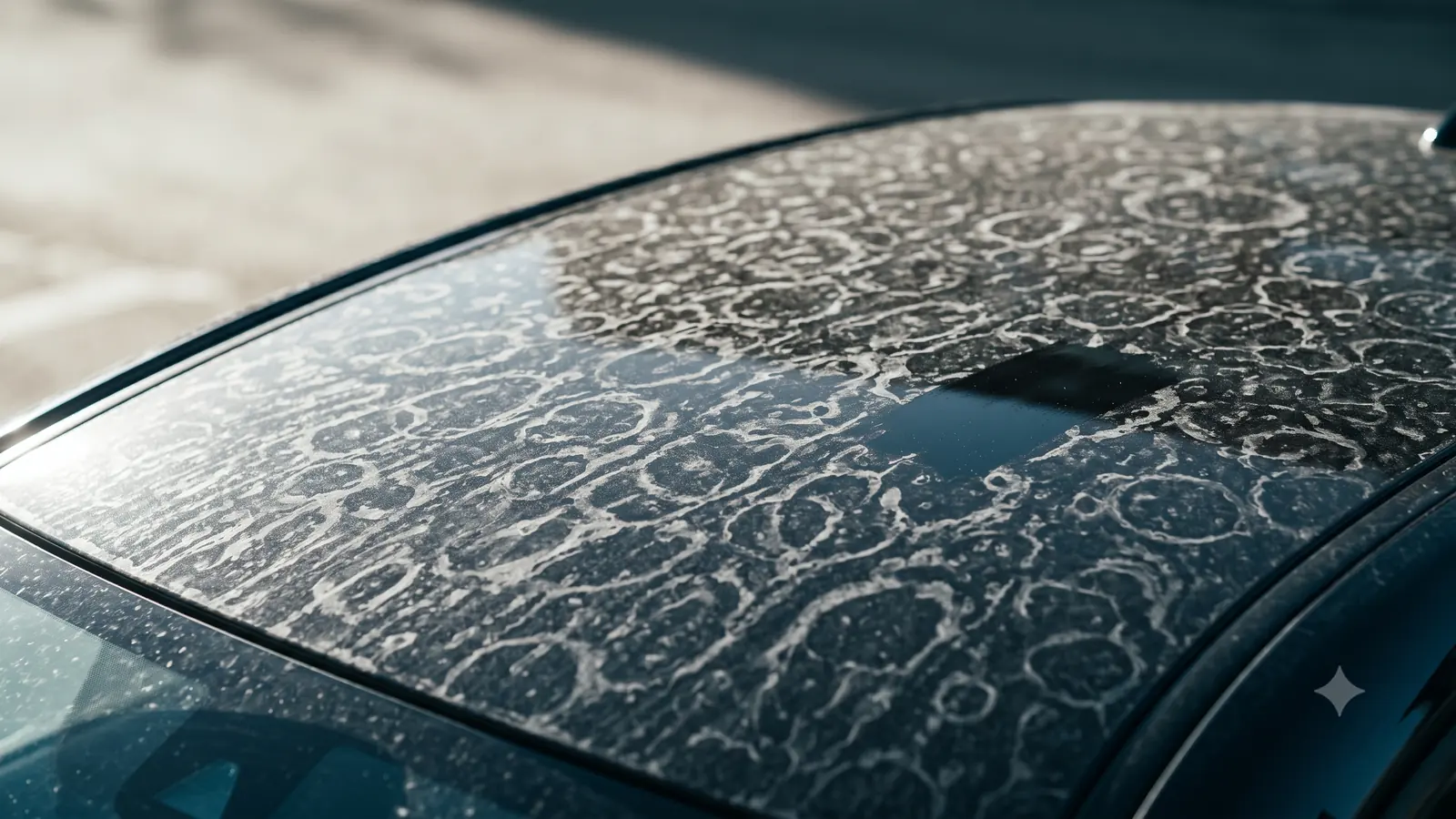
How to Remove Water Spots From Car Paint, By Type
Three different problems get called water spots and each needs a different fix. How to identify which one you have before you reach for anything abrasive.