Seasonal
How to Prepare a Car for Winter Road Salt and Cold
Road salt, underbody rinse habits, door seals and coating care through winter. Practical seasonal prep without a product shopping list.
By Ducky, Co-founder and Lead Tester, ShineMD
Ducky works for Shine Master Detailers LLC, which makes ShineMD.
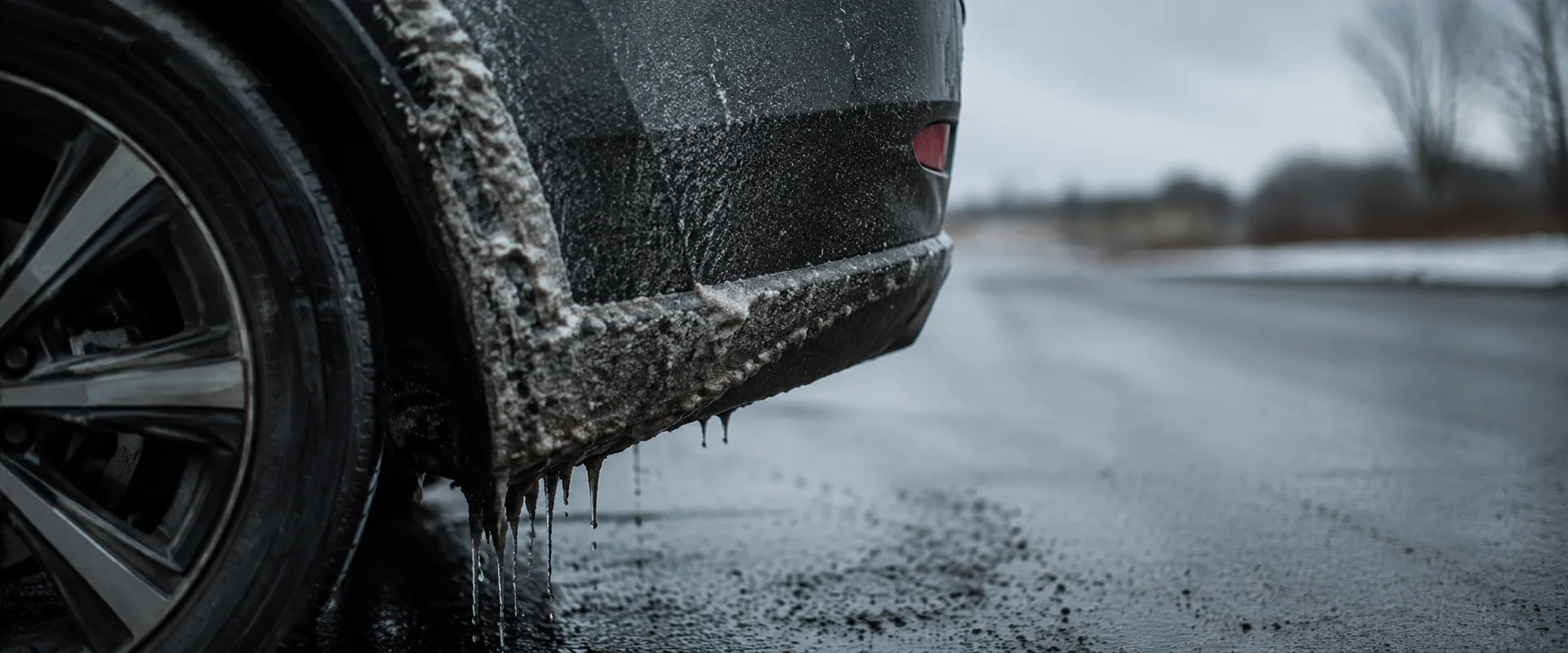
Winter car care is mostly chloride, moisture, and cold — not a seasonal product aisle. Road salt and brine accelerate corrosion where paint, underbody coatings, or seam sealers are already compromised. They also leave films that make every wash riskier if you drag grit across paint. Prepare the car so salt is easier to rinse off, seals still work at freezing temperatures, and you are not inventing damage while cleaning in a hurry.
What salt actually does
Chlorides do not invent rust on perfect, sealed steel in a weekend. They find chips, stone rash, seam edges, and the insides of rockers and hatch seams — places that stay wet. Brine sprayed by trucks reaches higher and further than people expect: door bottoms, fuel-filler surrounds, bumper edges, and the underside of the spare-tyre well on some cars.
Paint that is already swirled or thinly protected will look worse faster because contaminated wash water is abrasive. The paint-care priority in winter is frequent safe rinsing and careful contact washing, not a thicker coat of something marketed as “winter blend” without a clear mechanism.
Before the first brine truck
Fix the obvious breaches. Deep chips to metal on leading edges and sills are worth touching up before months of salt. Perfect factory finish is not the goal; sealing bare metal is.
Clean the car properly once. Remove bonded fallout and old contaminated protection so you are not sealing grit in. A careful pre-winter wash matters more than a ceremonial wax layer slapped over a dirty car. Technique still beats product — rushed winter washes are how swirl marks multiply.
Confirm you have protection you trust enough to maintain. Wax, sealant, or coating — we manufacture a coating, so discount enthusiasm accordingly — helps when it makes rinsing more effective and reduces how long contaminated water clings. None of them make underbody salt irrelevant. An intact layer you will wash gently all winter beats a neglected “ceramic” label.
Service the easy mechanical winter items while you are in preparation mode: wiper blades that still clear cleanly, washer fluid rated for your climate, tyre condition and pressure, and lights aimed and working. Detailing will not save a wipe of frozen dirt across dry glass.
Underbody and wheel arches
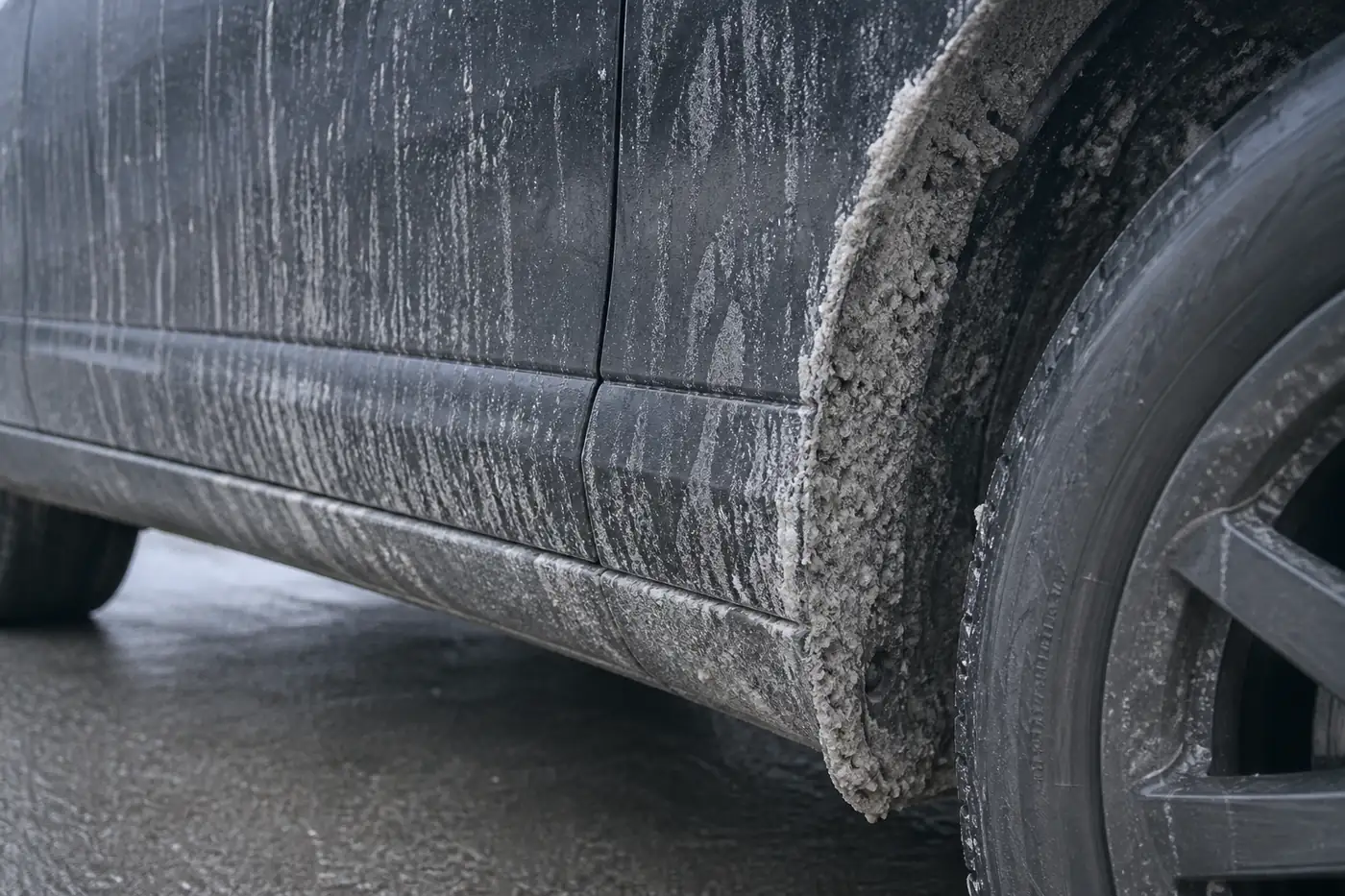
The arch lip and the panel seam are where brine collects and stays damp longest. Washing the paint and skipping this is most of why cars rot from the bottom. Illustration.
This is where winter prep earns its keep.
Rinse the underside on a schedule once salt appears, not once in November and again in April. Focus on wheel arches, behind wheels, rocker undersides, and the rear of the front wheels where spray concentrates. A drive-through underbody wash is imperfect but better than nothing if you lack a wand; follow with attention to arches when you can.
Do not pretend a quick curb rinse emptied every cavity. Drain holes clog; mud shields trap sludge. Packed deposits behind a liner need mechanical removal — not another spray of tyre dressing.
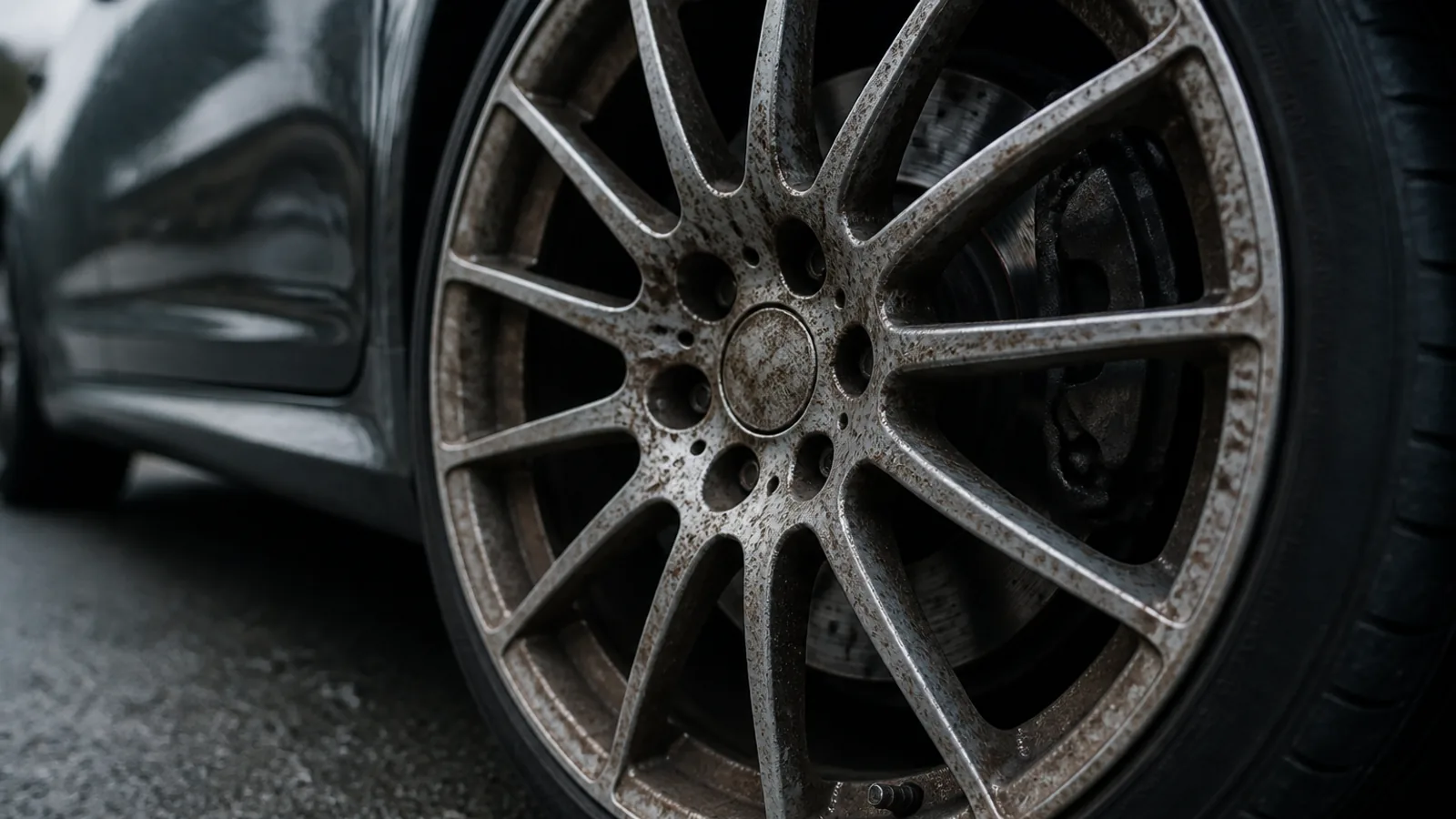
Clean wheels more often than the paint. Brake dust plus salt is a corrosive paste. Cool wheels, iron remover when needed, separate wash tools from paint tools — the same rules as the rest of the year, with less forgiveness if you skip weeks.
Door seals, latches, and frozen mornings
Rubber seals need to be clean and not screaming-dry. Road film on seals transfers to paint and clothing; dry, untreated rubber can stick to paintwork in freezing weather and tear. A light application of a protectant meant for automotive rubber — wiped so it is not greasy — is maintenance, not a shine contest. Keep product off the glass where it will smear.
Door latch and hinge areas collect salt paste. Periodically rinse and dry what you can reach; a manufacturer-approved lubricant on latches beats forcing a frozen door. Avoid flooding electronics in the door with open sprays.
Parking brake hardware and cables on older designs can freeze in place after wet snow if left engaged for days. Local climate and car design dictate habits here more than any universal detailing tip — know your car.
Washing habits that survive winter
Rinse before you touch. Salt and grit on a dry mitt are sandpaper. Pre-rinse thoroughly, especially lower panels.
Work in the warmest conditions you can, even if that means a shorter wash more often. Soap and rinse water that freeze on the panel create their own problems. Touchless washes with harsh chemistry are a compromise when the alternative is a coated car covered in abrasive brine — they can shorten the life of sacrificial protection, which you should plan to renew, but they beat grinding salt in by hand with a filthy sponge.
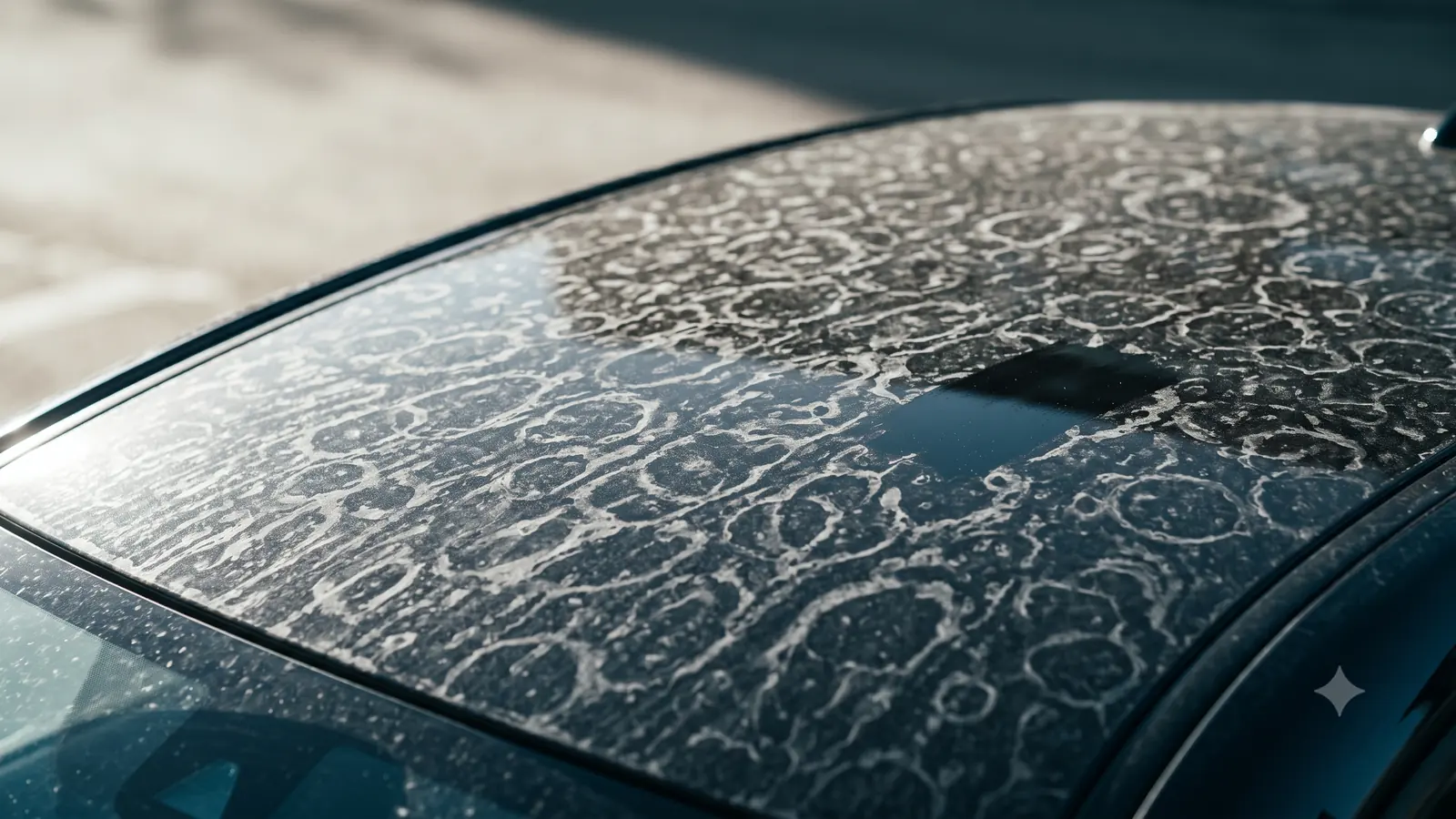
Dry carefully or use a blower. Freezing wind will flash-dry mineral-laden water into spots. A quality drying towel used with almost no pressure, or filtered air, matters more in winter because you are often washing less patiently.
Interior moisture. Snow melts into carpets and rusts floor pans from the inside. Rubber mats, shaking snow off feet before entry, and drying soaked carpets promptly are winter detailing even though no wax is involved.
Coating and sealant maintenance in the cold
Cold panels, short days, and roadside film are hostile to fresh ceramic applications. Mid-winter is a poor time to attempt a full correction and coating outdoors. Maintain what you have: wash without stripping it aggressively every week, use pH-appropriate soap, and accept that brine season is when sacrificial layers do their job by taking abuse.
If water stops sheeting and the paint feels grippy with film, clean first — clay or a suitable decontamination if needed — then refresh with whatever maintenance product matches the system you already run. Do not stack random spray coatings weekly on top of road film and call it preparation.
We are a coating manufacturer. The honest winter claim is modest: a surface that rinses cleaner is easier to wash safely; it does not exempt you from underbody care, chip sealing, or avoiding abrasive wash technique.
When to get professional help
Seek a shop when you have active rust blooming from seams or arches, when underbody trays need removal to extract packed salt mud, or when paint damage from winter washing is already severe enough that correction should wait for warmer, controlled conditions with thickness checks. Also get help if door seals are torn or a frozen closure feels like it will break — forcing hardware in January is how plastic clips and rubber tear. A single thorough professional decontamination in early spring is often smarter than aggressive DIY polishing on salt-stressed paint in February.
Keep reading
All seasonal guides →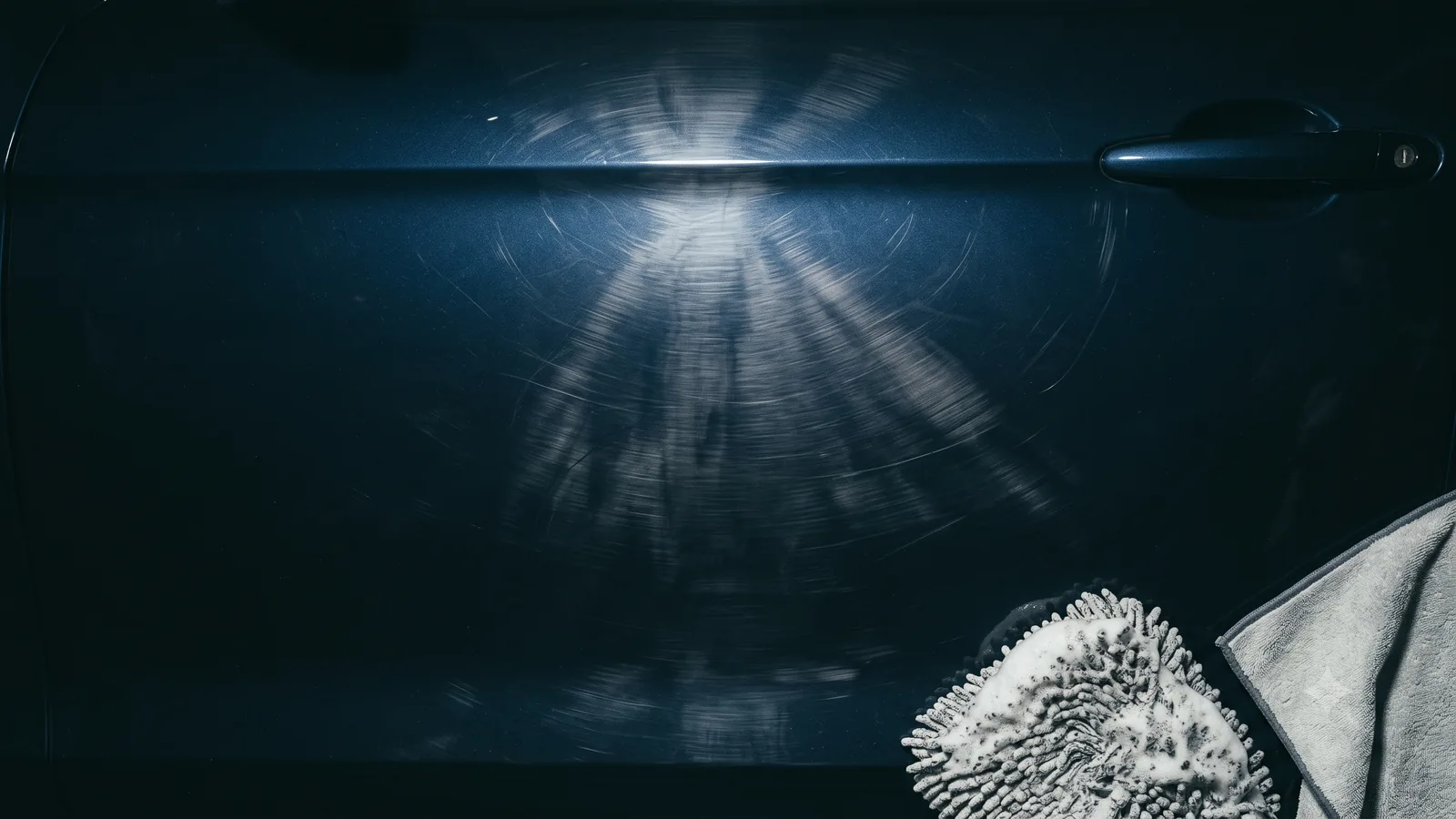
How to Wash a Car Without Scratching It
Most swirl marks are installed during washing and drying, not by weather. The technique that prevents them, and why two buckets is only half the answer.
How to Remove Brake Dust From Wheels Without Damaging Them
Brake dust is hot iron embedded into the finish, not dirt sitting on it. Why soap alone cannot work, and how to clean wheels without ruining the coating.
How to Remove Water Spots From Car Paint, By Type
Three different problems get called water spots and each needs a different fix. How to identify which one you have before you reach for anything abrasive.