Wheels & Tires
How to Remove Brake Dust From Wheels Without Damaging Them
Brake dust is hot iron embedded into the finish, not dirt sitting on it. Why soap alone cannot work, and how to clean wheels without ruining the coating.
By Ducky, Co-founder and Lead Tester, ShineMD
Ducky works for Shine Master Detailers LLC, which makes ShineMD.
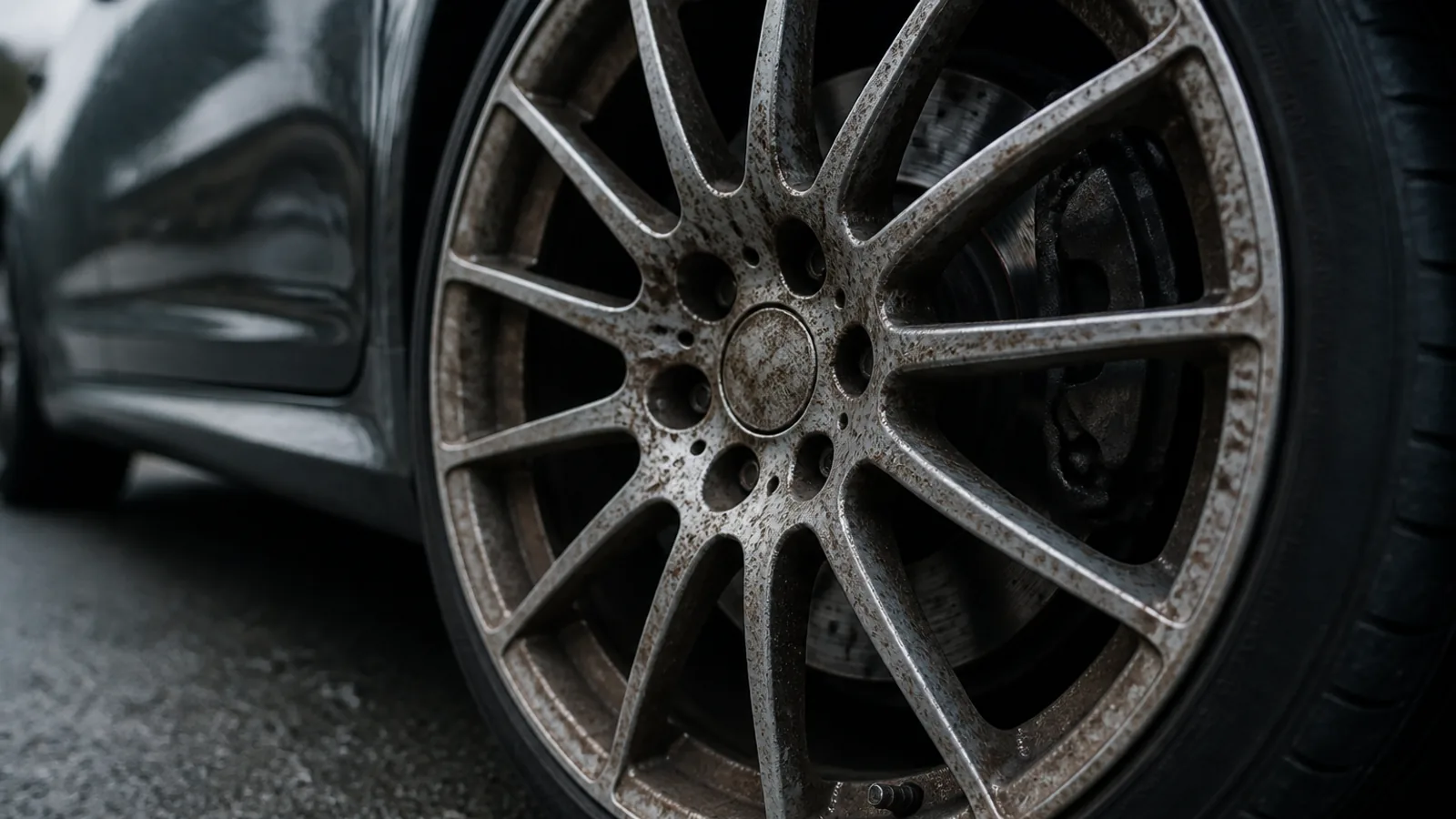
Brake dust resists ordinary washing for a reason that has nothing to do with how hard you scrub. Understanding it saves both effort and wheel finishes.
What brake dust actually is
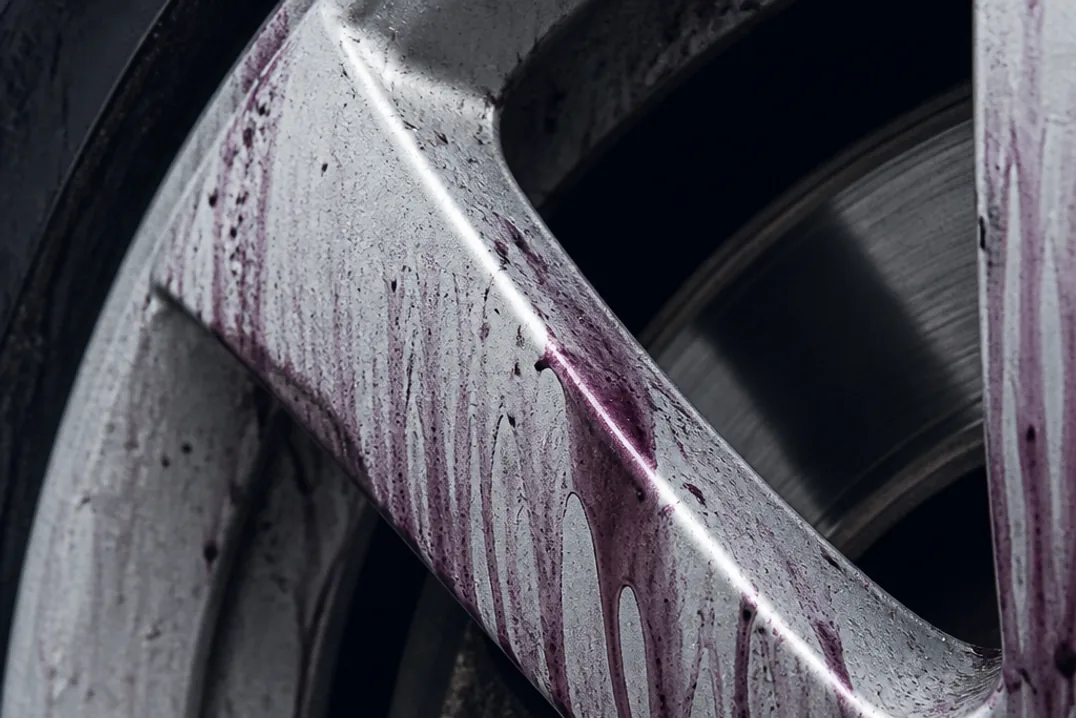
The purple bleed is the reaction, not dye. Illustration.
Braking generates enormous localised heat. What comes off the pads and the disc is a mixture of iron particles from the rotor and organic pad material, and it leaves the brake assembly hot and moving fast. Those particles strike the wheel and partially embed into the finish while still hot.
So brake dust is not a layer of dirt resting on the wheel. It is iron mechanically keyed into the clear coat or lacquer, which is why soap and a sponge lift the loose surface layer and leave the wheel looking grey and dull. You have removed what was sitting on top and left everything that matters.
That embedded iron then oxidises. The orange-brown speckling people notice on light-coloured wheels is rust forming in situ, and left long enough it works into the finish and stains permanently.
This also explains why brake dust is the most abrasive contamination on the entire car. Cleaning a wheel with a mitt and then using that mitt anywhere on the paint transfers iron particles onto clear coat under pressure.
The method
Do the wheels first, and keep the equipment separate forever. Separate bucket, separate mitt, separate brushes, all labelled or visibly different. This is the single most important rule in this article and the most commonly broken one.
Work on cool wheels, never after driving. Chemicals flash off hot surfaces before they can work, and cold water on a hot disc is bad for the disc. If you have just driven, wait.
Rinse thoroughly first. Removes the loose material so the chemistry can reach what is embedded.
Use an iron remover, and let it do the work. These contain a compound that reacts specifically with iron particles and dissolves them into a soluble form — the colour change to purple or red that people find alarming is that reaction happening, and it is a genuinely useful diagnostic. Spray, let it dwell for the time on the bottle, and do not let it dry. This step is what actually cleans a wheel, and it needs no scrubbing at all.
Follow with a pH-neutral wheel cleaner and soft brushes. A soft-bristle wheel brush for the face, a long thin brush for the barrel, and a small detailing brush around lug nuts and valve stems. The barrel is where brake dust accumulates most heavily and where almost nobody cleans.
Rinse completely, including behind the spokes. Iron remover residue left on the wheel keeps reacting.
Dry the wheels. Water left in lug recesses and around the valve stem causes staining and corrosion.
Consider a wheel sealant or coating. Wheels are the highest-value surface on the car to protect, because the contamination is the most aggressive and the cleaning is the most awkward. A slick surface means the next round of dust rinses off instead of embedding.
What damages wheels
Acidic wheel cleaners on the wrong finish. Strong acid cleaners work fast and will etch polished aluminium, stain anodised finishes and attack the lacquer on painted wheels. On a clear-coated wheel — which most modern wheels are — pH-neutral plus an iron remover is both safer and more effective.
Steel wool, wire brushes and abrasive pads. These remove brake dust and the finish together.
Any degree of pressure on a diamond-cut wheel. Diamond-cut and polished-lip wheels have a thin lacquer over machined metal. Once that lacquer is breached, moisture gets underneath and the wheel begins to corrode from below, which shows up as milky white blooming that cannot be cleaned off — only refinished.
Letting the cleaner dry. Every wheel chemical assumes a wet surface and a rinse.
High-pressure washing at close range on a damaged finish. Pressure will lift lacquer that has already started to fail at the edges.
The tyres and arches, while you are there
Clean the tyre with a dedicated cleaner and a stiff brush to remove old dressing and the brown blooming that silicone leaves behind. Tyres that will not hold dressing are usually tyres that were never properly cleaned.
Clean the wheel arch liners too. They hold enormous amounts of grit that ends up back on the wheel and the lower panels at the next rain.
Apply dressing to a dry tyre, thinly, and wipe off the excess. Heavy dressing slings onto paint at speed and attracts dust.
Prevention
Clean wheels more often than the rest of the car. Fresh brake dust rinses off. Old brake dust is rust.
Protect them. A coating or sealant on wheel faces and, if you can reach it, the barrels, converts an hour with brushes into a rinse. This is the application where protection makes the largest practical difference to the work involved — more so than on paint, in our experience.
Consider your pads if it is extreme. Some pad compounds generate dramatically more dust than others. If you are cleaning brown wheels every week on a car you keep clean, the pads are a legitimate part of the conversation.