Washing
How to Wash a Car Without Scratching It
Most swirl marks are installed during washing and drying, not by weather. The technique that prevents them, and why two buckets is only half the answer.
By Ducky, Co-founder and Lead Tester, ShineMD
Ducky works for Shine Master Detailers LLC, which makes ShineMD.
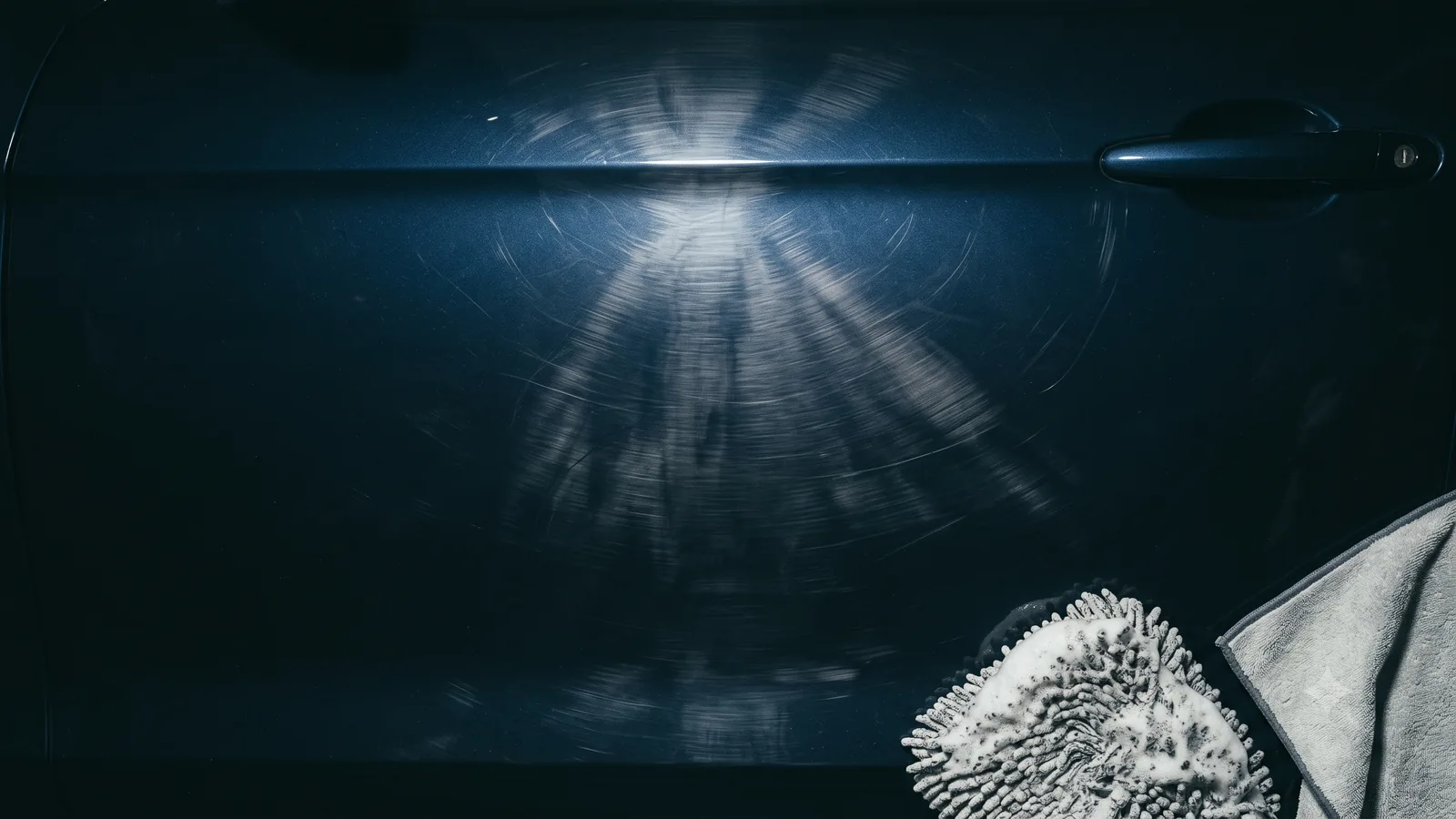
The swirl marks you see on a dark car in sunlight were almost certainly put there by someone washing it. Not by weather, not by road grit in motion, not by age. By a towel or a mitt dragging trapped dirt across the clear coat.
That is the useful frame for this whole topic: washing is the most dangerous thing you routinely do to your paint, and the goal of good technique is not cleanliness but damage avoidance.
Why the two-bucket method is only half the answer
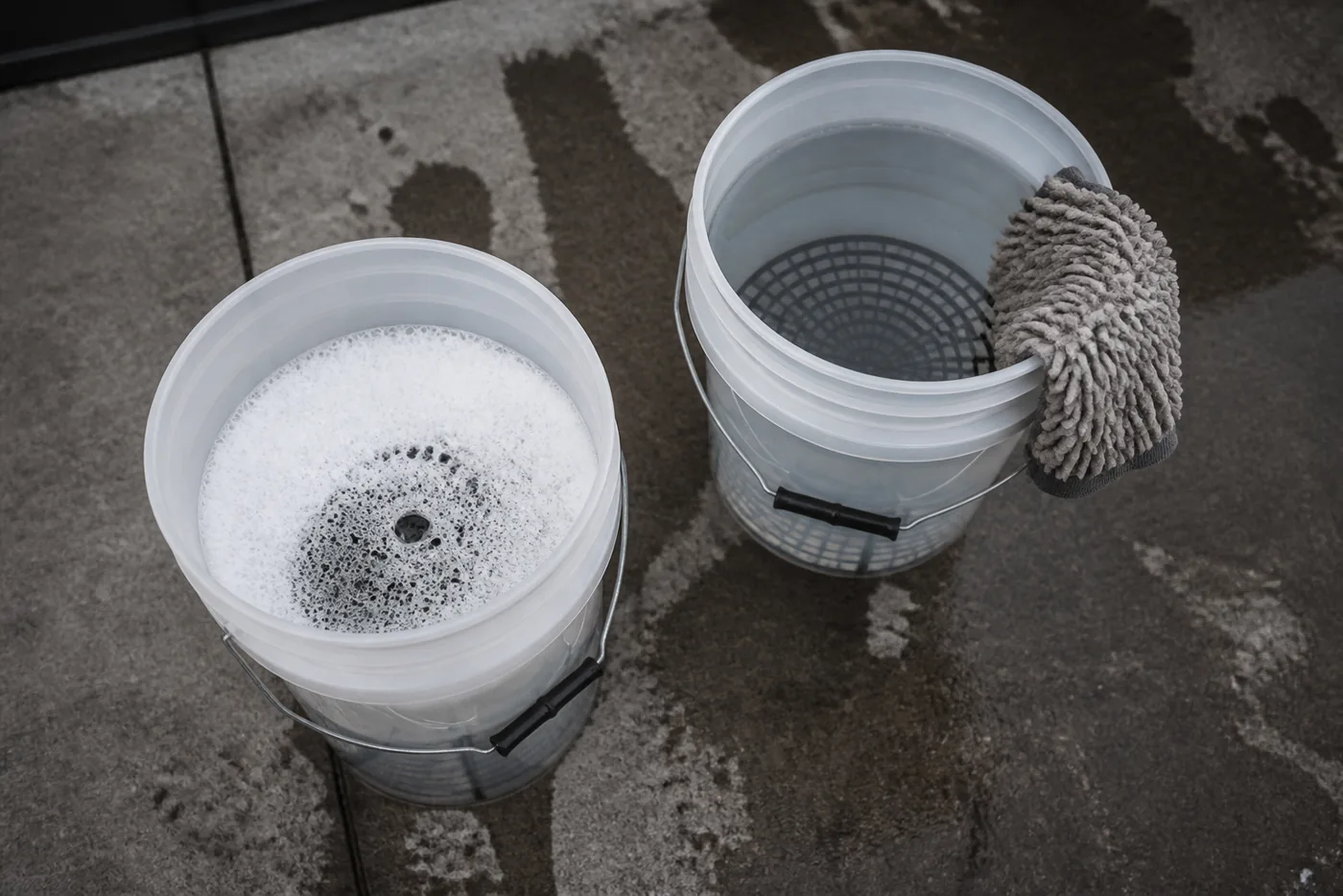
Two buckets and grit guards. Illustration of the setup — not a photograph from our shop.
The two-bucket method — one bucket of soapy water, one of clean rinse water, and a grit guard in each — is the standard recommendation and it is genuinely worth doing. It keeps the dirt you just removed from going back onto the mitt and then onto the paint.
But it addresses only the wash step. In our experience the drying step causes at least as much damage, and it gets a fraction of the attention. A dirty or low-quality drying towel dragged over a large panel is contacting the paint under pressure with nothing lubricating it. If any grit survived the rinse, drying is where it gets ground in.
Two buckets and a bad towel is not a solution.
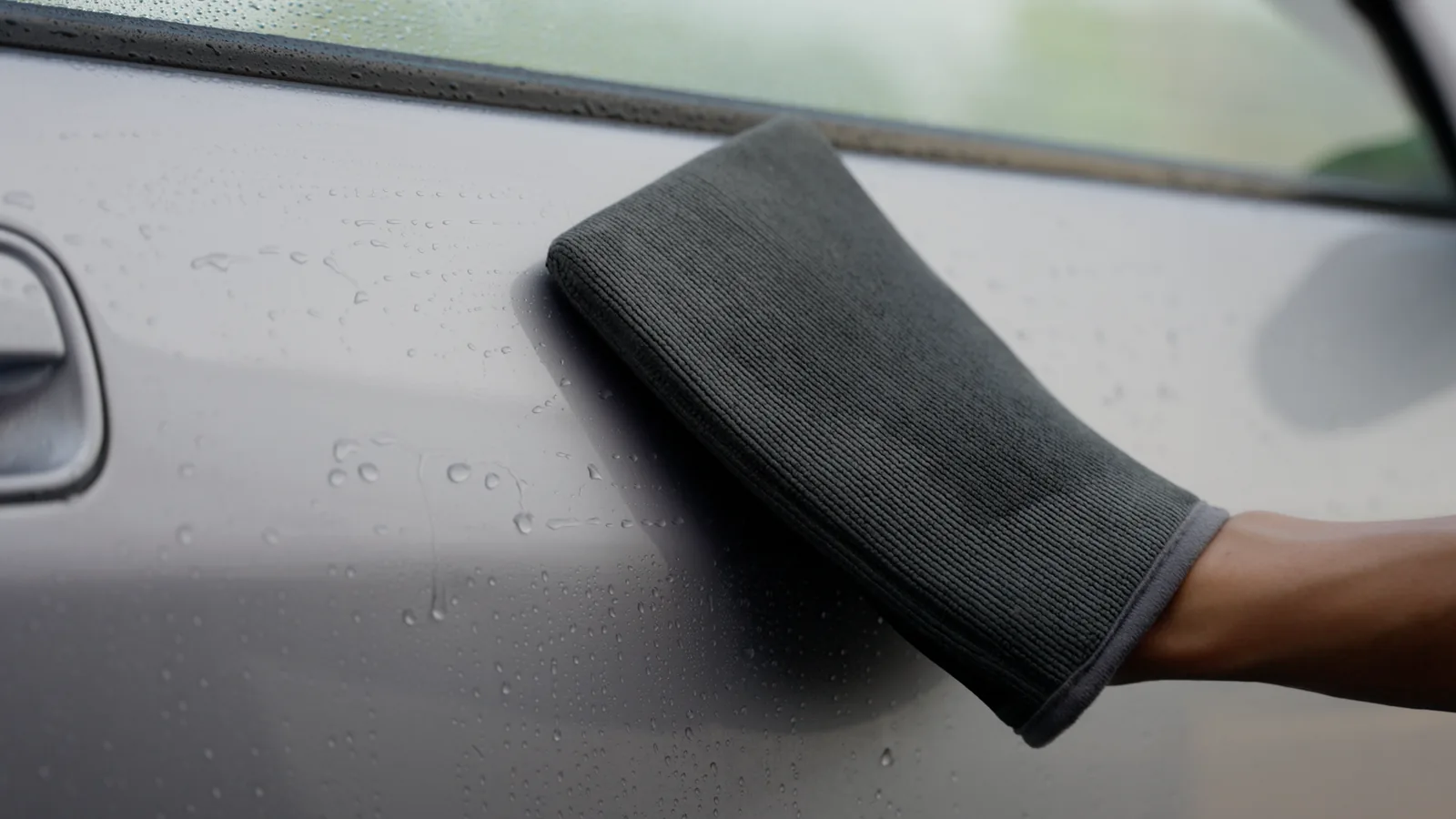
Wash mitt on coated paint with water beading ahead of the stroke. Photograph from our store product library — technique reference, not a durability result.
The sequence that matters
Work in shade, on a cool panel. Soap drying on hot paint leaves deposits, and you end up going back over dried areas with more pressure. Every water spot problem starts here.
Rinse thoroughly before any contact. The purpose is to remove as much loose grit as possible before anything touches the surface. Most of the risk in a wash is in the first contact with an under-rinsed panel. Take longer than feels necessary.
Do the wheels first, with separate equipment. Wheels carry brake dust, which is iron particles and pad material — by far the most abrasive contamination on the car. A mitt that has touched a wheel should never touch paint again that day. Separate bucket, separate mitt, separate brushes, no exceptions.
Pre-treat the lower panels. The bottom quarter of the car, behind the wheels and along the sills, holds the heaviest and sharpest grit. A foam or pre-wash spray with a proper dwell time removes a meaningful amount of it with no contact at all.
Wash top-down, in straight lines. Gravity means the dirtiest surfaces are lowest, so working downward stops you carrying heavy grit up onto clean panels. Straight-line motions matter because a scratch that follows the panel’s contour catches light less than a circular swirl does — the damage is similar, but the visibility is not.
Rinse the mitt every panel, in the rinse bucket, against the grit guard. This is the actual mechanism of the two-bucket method, and skipping the guard skips most of the benefit.
Use plenty of soap and let it lubricate. Car shampoo’s job is as much lubrication as cleaning. A weak mix is a false economy that shows up as swirls.
Final rinse, then dry immediately. Do not let it air dry, and do not walk away mid-job.
Drying, which deserves more care than it gets
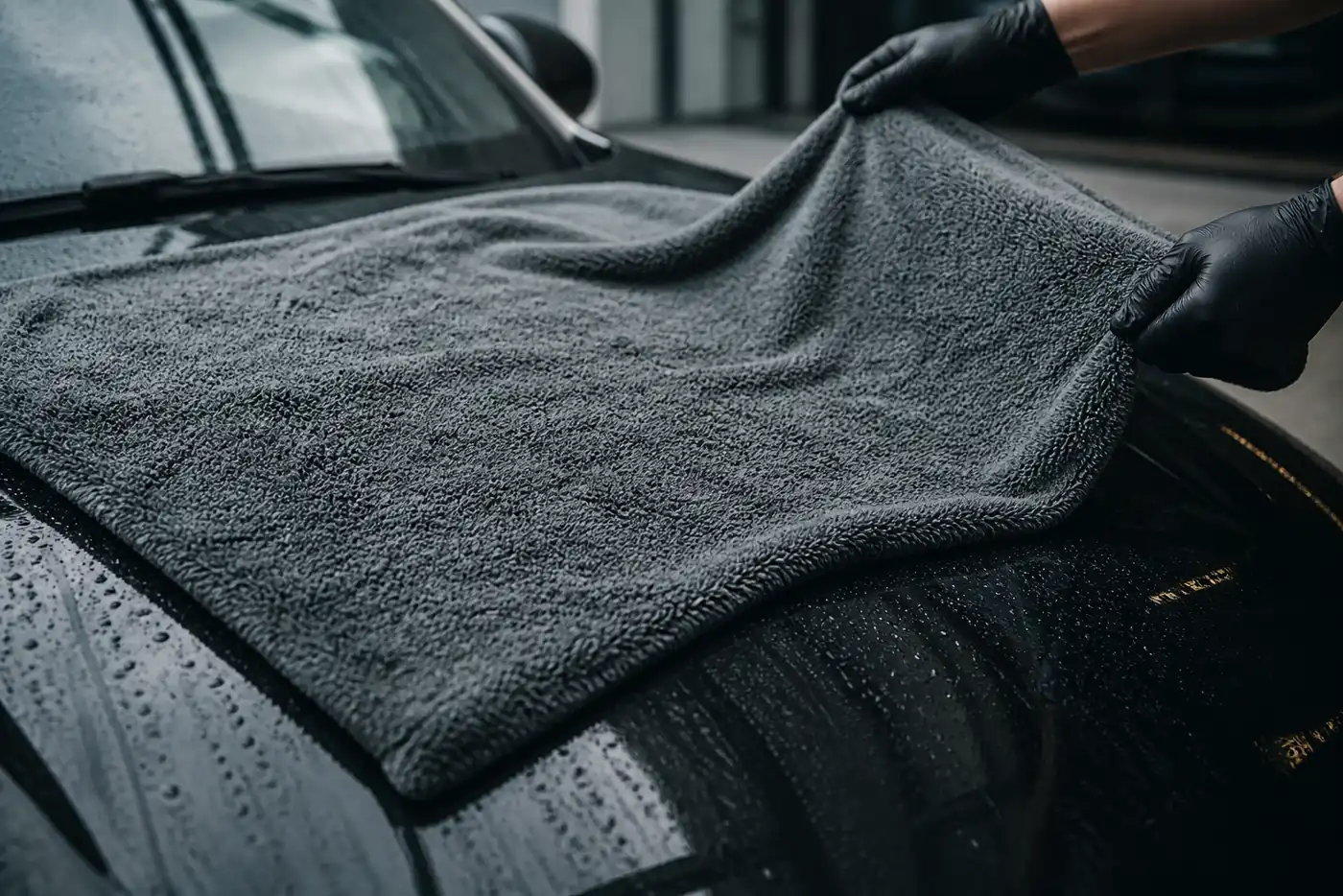
Lay the towel, do not drag it. Illustration.
Use a large, plush, clean microfibre drying towel. Not a chamois, not a bath towel, not the towel that lives on the garage floor. A drying towel that has been dropped is contaminated and needs washing before reuse.
Blot and lay, do not drag. Lay the towel on the panel, pull it gently across with no downward pressure, or simply lift it. Pressure plus any remaining grit equals swirls.
A filtered blower is the lowest-risk option because it makes no contact at all. This is genuinely the biggest single upgrade available for scratch avoidance, and it also clears water from mirrors, grilles and badge surrounds that towels push water into.
A drying aid gives you lubrication for the one step that has none. A light mist of quick detailer or a slick spray over the wet panel before drying substantially reduces friction.
What to stop doing
Automatic washes with brushes. The brushes contact every car that came before yours, carrying whatever those cars were carrying. Touchless is a real improvement, though the chemistry is harsh enough that it will shorten the life of wax, sealant and spray coatings.
Washing up liquid. It is designed to strip grease and it strips protection efficiently. It also has no meaningful lubricity for paint.
Circular motions. Same damage, more visible result.
One bucket and a sponge. A flat sponge holds grit against the paint rather than lifting it into the pile the way a mitt does. This is the single worst common combination.
Washing a filthy car with contact, immediately. If the car is genuinely dirty, pre-wash and rinse are not optional preliminaries. They are where the safety comes from.
Where protection actually helps
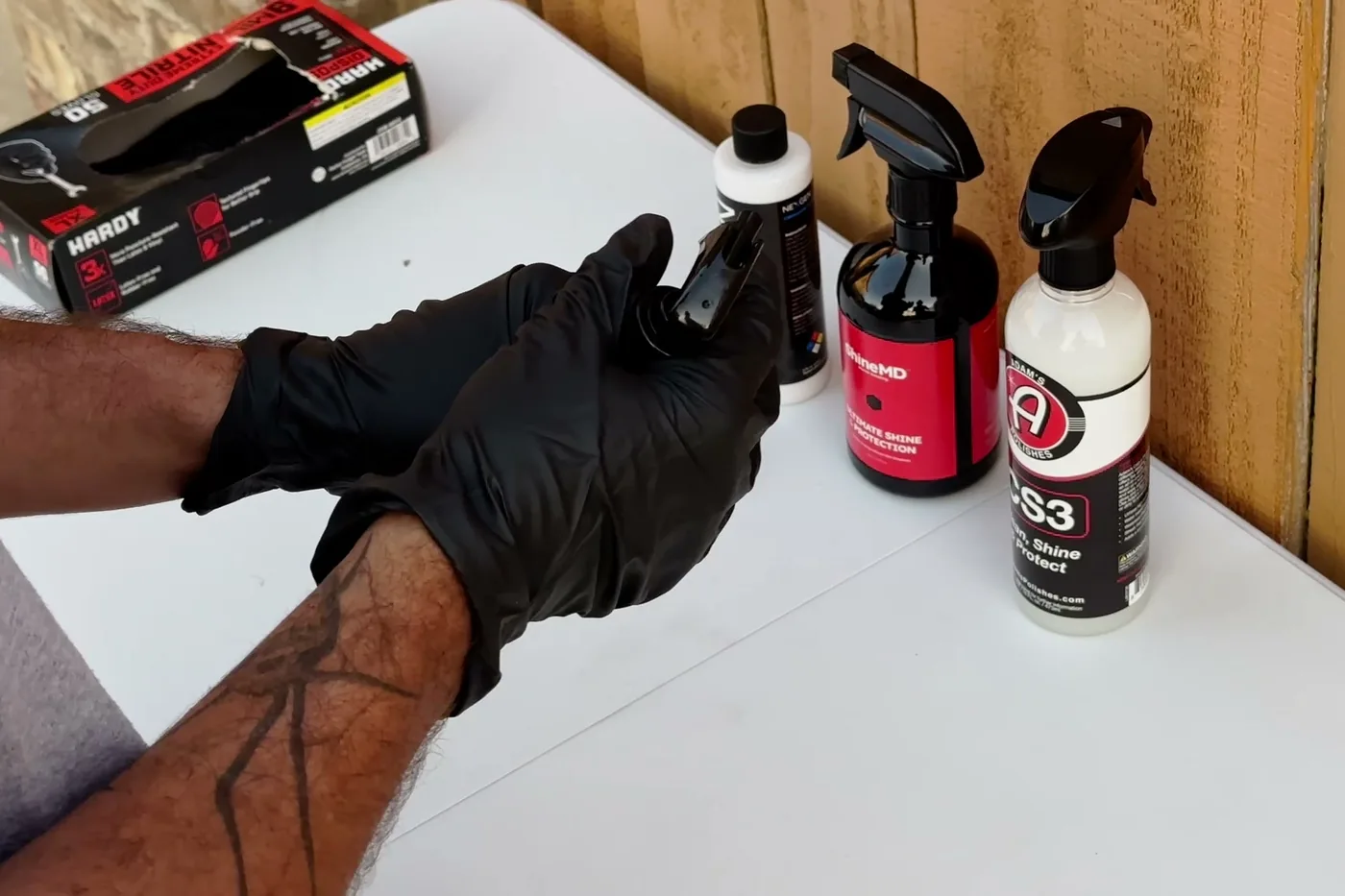
Decontamination, not washing. A clay mitt only belongs on a panel that is flooded with lubricant, and only when a washed panel still feels rough — which for most cars is once or twice a year, not every wash. Still from our own filming.
A slick surface reduces the friction of every contact and releases dirt more readily during the rinse, which means less grit present when the mitt arrives and less pressure needed to remove what remains. Drying is faster because water sheets rather than clinging.
We manufacture a coating, so treat that with the scepticism it deserves. The narrower version we are confident in is that this benefit comes from any intact slick layer — wax, sealant or coating — and that technique matters more than product. A coated car washed badly will pick up swirls. An unprotected car washed carefully largely will not.
If you only change one thing, change the drying towel.